Hello, I'm Malik.
Ten years of software engineering, 210+ projects at 5.0 on Fiverr, the last few years shipping LLM systems into real business software. Karachi, UTC+5.
Read about me →
Hello, I'm Malik.
Ten years of software engineering, 210+ projects at 5.0 on Fiverr, the last few years shipping LLM systems into real business software. Karachi, UTC+5.
Read about me →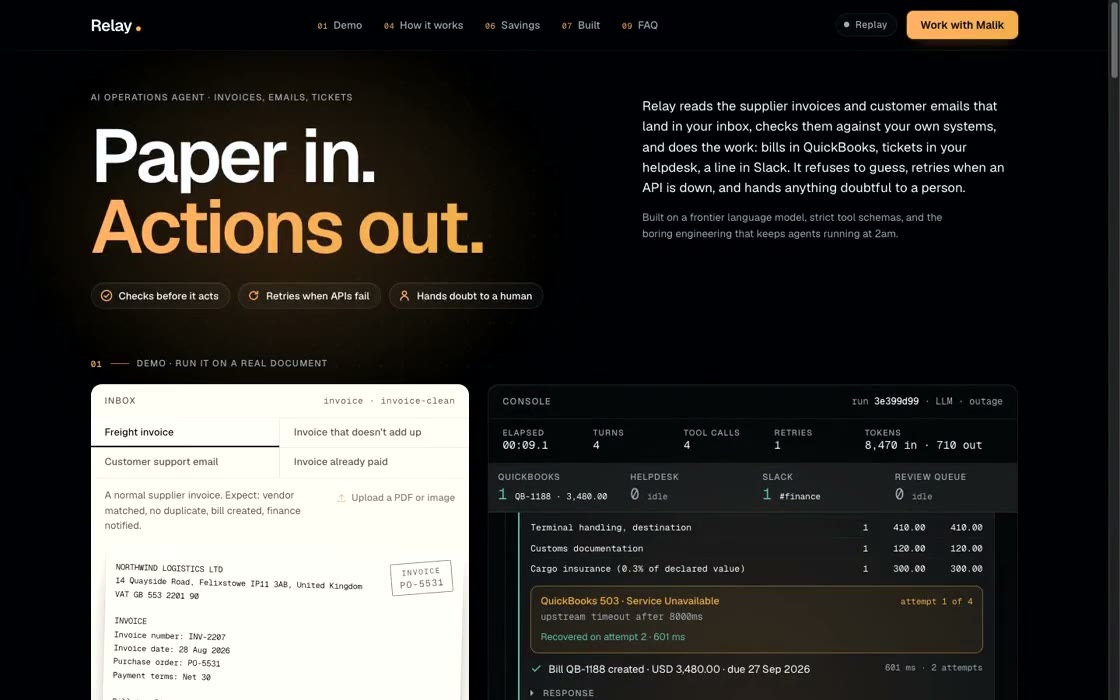
Relay live
Paper in. Actions out. An AI operations agent that turns invoices and emails into QuickBooks bills, helpdesk tickets and a line in Slack.
5 projects →Systems that do the work. Not a chatbot that answers and stops.
Within 24 hours: an honest read on approach, timeline, cost.
hello@malikakhtar.dev
WhatsApp +92 313 8350598
Karachi, Pakistan · UTC+5
Open to new projects · replies within 24 hours
10 years of software engineering: web apps, mobile apps and the back ends behind them. The last few shipping LLM systems into real business software. Not a chatbot that answers and stops.
Pick a problem. This is the shape of the read I'd send back within 24 hours.
RE: Invoices & documents
RE: CRM ↔ accounting sync
RE: An assistant on your own data
RE: An undocumented or legacy API
RE: A web or mobile app

I've spent ten years building software for people who need it to work on Monday morning, not just in the demo. More than two hundred and ten projects with a 5.0 average rating on Fiverr, and enough production incidents to know what actually matters: honest scoping, boring reliability, and code you still own when I'm gone.
For the last few years that has meant putting LLMs to work inside real business systems — agents that read documents and take actions, assistants that answer with sources, integrations between tools that were never meant to talk. I like the unglamorous parts: retries, rate limits, logging, the monitoring that keeps a system running while you sleep.
I work from Karachi with clients in the US, UK, EU, Australia and the Middle East, overlapping US mornings and EU afternoons. You'll get written updates without asking, a realistic estimate, and a straight answer — including "you don't need AI for this" when that's the truth.
A short scoping call before any estimate. I would rather tell you the project is simpler than you thought than take a bloated budget.
Error handling, logging, and monitoring from day one, not after something breaks. Realistic estimates, fixed scope, clear milestones, no surprise invoices.
Documented, structured, yours. No lock-in, no black box, and support after delivery — I don't disappear at handover.
Three you can open. Two I can only describe: that client work stays private, so I show the shape of it instead.
01 AI operations agent live
Paper in. Actions out.
An AI operations agent that reads supplier invoices and customer emails, checks them against the company's own systems, and does the work: bills in QuickBooks, tickets in the helpdesk, a line in Slack.
02 Assistant on your own data live
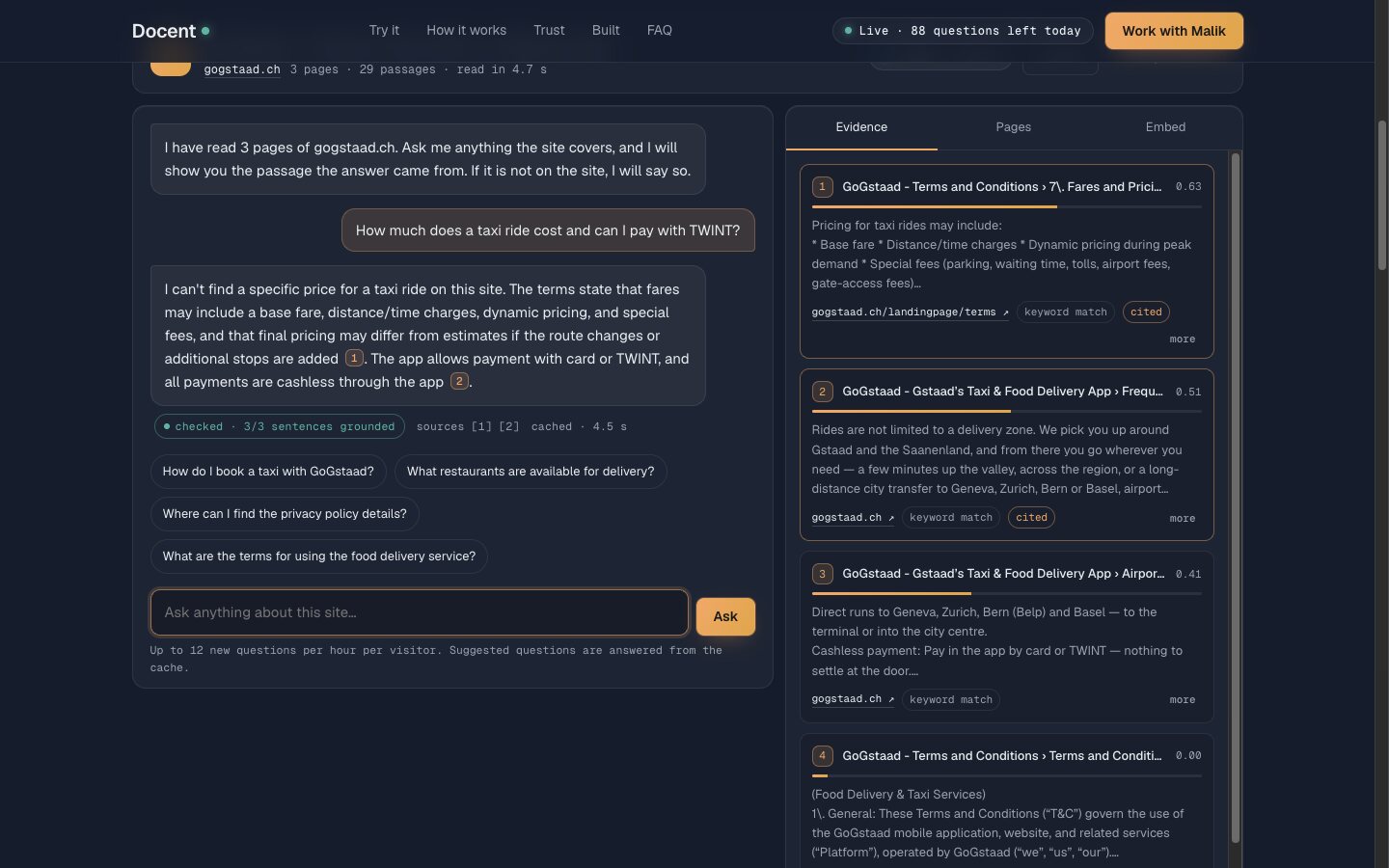
Any website. Answers with receipts.
Paste a website and Docent reads it, indexes it, and becomes its support assistant: every answer cites the exact passage it came from, a second pass checks each sentence against the source, and when the answer isn't on the site it says so. Visitors can try it on their own site and take the embed snippet home.
03 Client work · Gstaad, Switzerland live
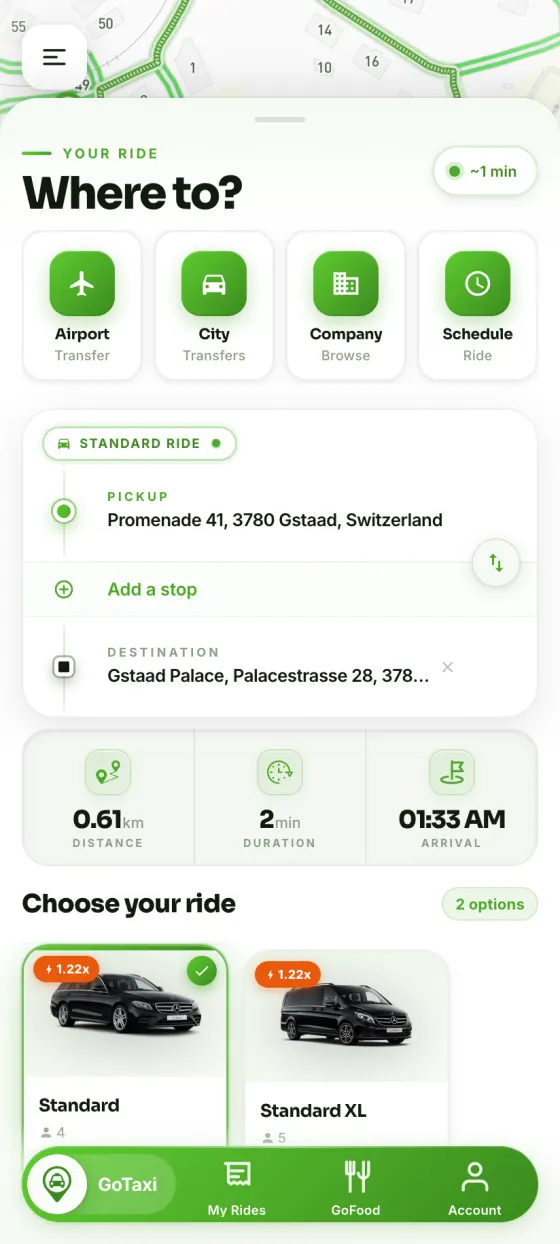
A ride or a meal. One app, one account.
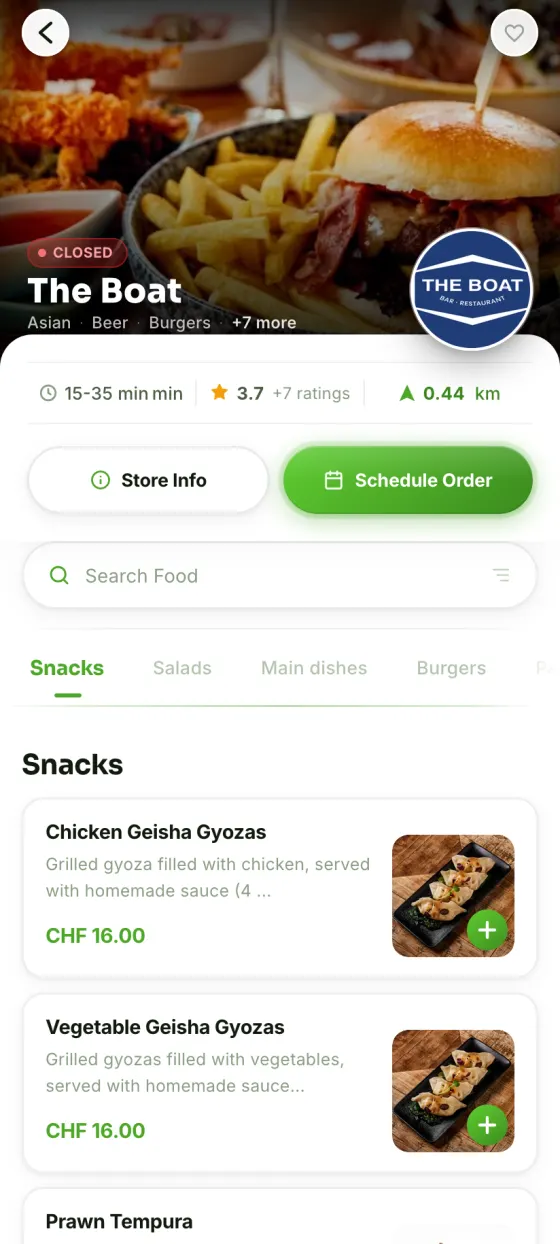
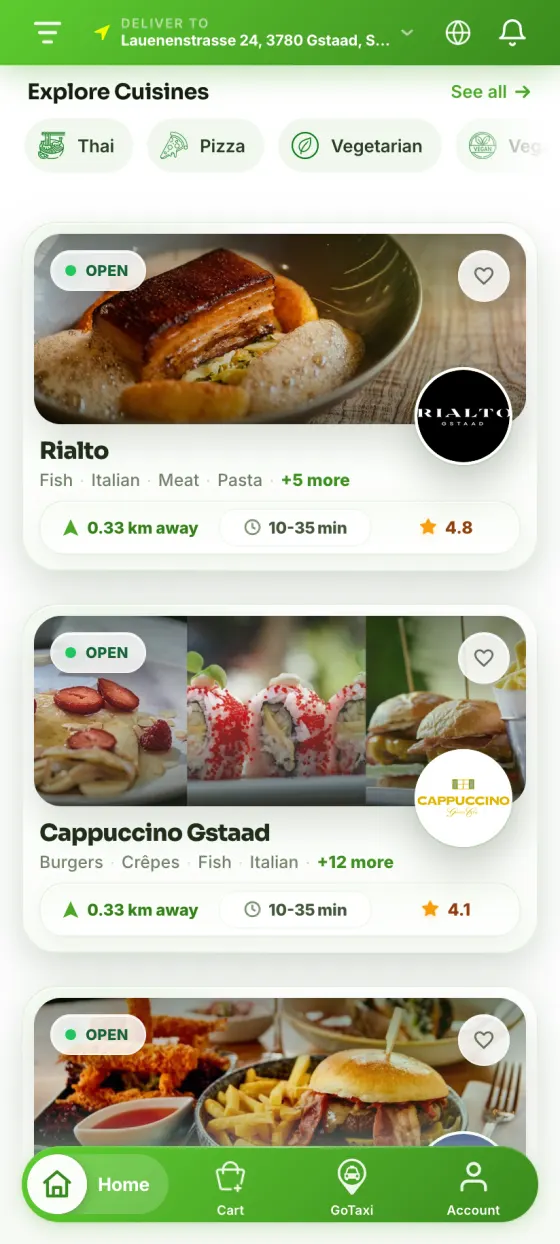
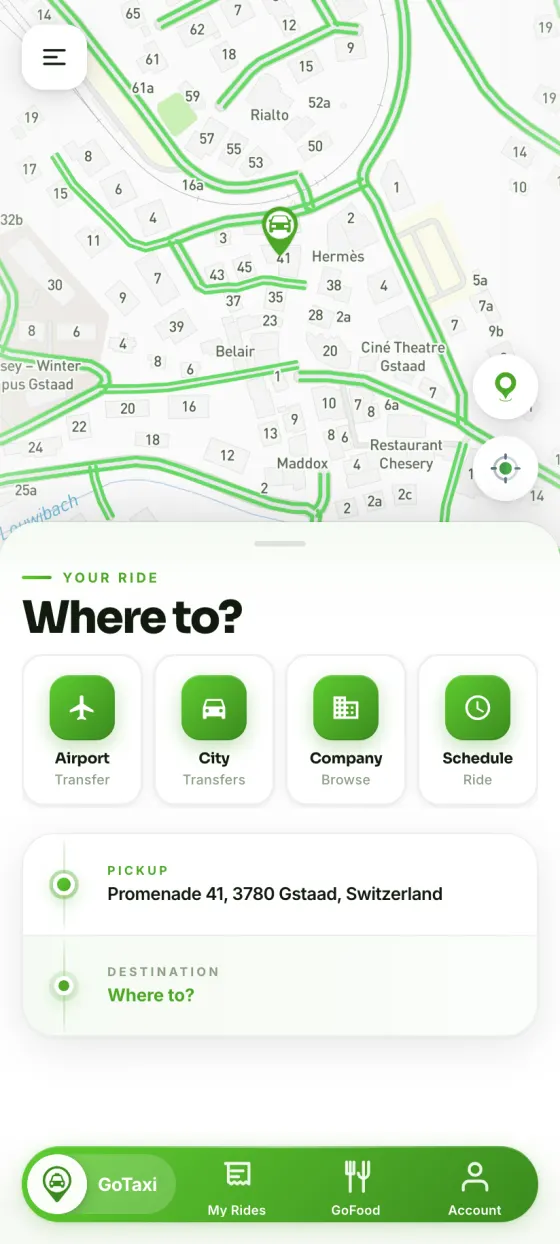
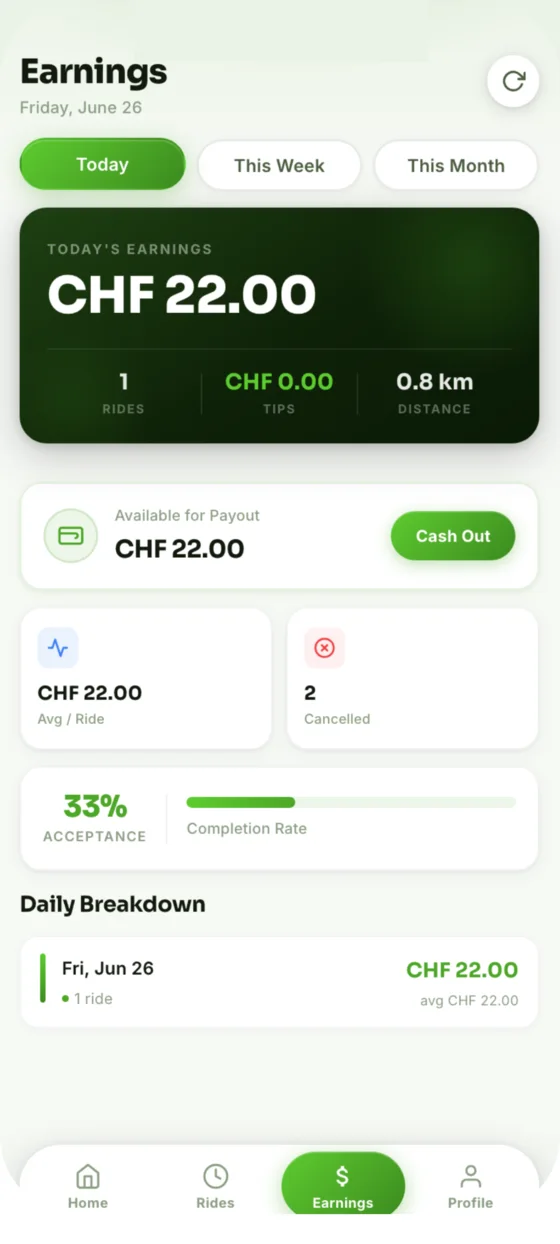
The taxi and food delivery app for Gstaad and the Saanenland: a customer app for iOS and Android, a driver app, and the backend that runs both. Order from local restaurants and follow the delivery, or book a taxi with the fare shown before you confirm, schedule the early airport run the night before, and pay by card or TWINT.
04 Client work · Logistics company
Refunds, partial payments, and reconciliation handled automatically. Has reconciled cleanly since launch without manual fixes.
No public link — client work
05 Personal tooling
Fetches listings, scores them against a profile, drafts proposals with an LLM, schedules follow-ups. FastAPI + SQLite + local dashboard, tested end to end.
No public link — personal tooling
Systems that do the work. Not a chatbot that answers and stops. Pick one and the stage draws it.
Systems that do the work: process documents, qualify leads, research, draft, classify, and take real actions inside your tools. Not a chatbot that answers and stops.
LLMs wired into your CRM, database, admin panel, Google Workspace, Slack, Notion, HubSpot, Shopify, or a legacy system nobody wants to touch.
Third-party, undocumented, and legacy SOAP APIs. Webhooks, OAuth flows, rate-limited endpoints, data syncs between systems never designed to talk. Half my career.
Trained on your own data, answering with sources so output is verifiable instead of confidently wrong.
The APIs, queues, schedulers, and pipelines underneath all of the above. Built to survive production, not just a demo.
Multi-domain sending, SPF/DKIM/DMARC, custom tracking domains, warmup, API-level integration.
Full products and internal tools: React and Next.js front ends on Python or Node back ends, admin panels, dashboards, and the APIs underneath. Ten years of shipping software that is documented, structured, and yours.
React Native and Flutter apps that share the API, auth, and data of your web product: iOS and Android from one codebase, with the backend built to match.
I tell you when AI is the wrong tool. Sometimes a 40-line script beats an LLM: cheaper, faster, deterministic. I say so even when the AI version would bill more hours.
01 First reply · within 24 hours
Send me the problem, even roughly. Within 24 hours you get an honest read on approach, timeline, and cost. If I am not the right person for it, I will tell you that too.
02 Scoping call · short, first
A short call before any estimate. I would rather tell you the project is simpler than you thought than take a bloated budget. Sometimes a 40-line script beats an LLM.
03 Scope & milestones · fixed, written
Fixed scope, clear milestones, realistic estimates. I have been wrong enough times to know how long things take, so the plan is one you can hold me to.
04 Build · with written updates
Regular written updates, so you always know the status. Error handling, logging, and monitoring from day one, not after something breaks.
05 Handover & after · support included
Documented, structured, yours: code you can hand to another developer, no lock-in, no black box. Support after delivery. I do not disappear at handover.
Everything orbits the product. Six layers, in the order a request travels through them, and the older ones I still add AI to.
the apps people touch · 5
Products and internal tools: React and Next.js front ends, dashboards and admin panels, and React Native or Flutter apps that share the same API and data.
the APIs and the logic · 6
FastAPI and Django in Python, Express and NestJS in Node: the APIs, queues, schedulers and pipelines underneath everything, built to survive production.
the reasoning, kept on a leash · 9
Agents with strict tool schemas and approval thresholds, RAG assistants that answer with sources, evals so the output is verifiable instead of confidently wrong.
where it lives and runs · 10
PostgreSQL first. Redis for queues and caching, vector stores for retrieval, Docker and AWS with CI/CD so deploys are boring and repeatable.
the systems it has to talk to · 12
Half my career: third-party, undocumented and legacy APIs, webhooks, OAuth flows, rate limits, and syncs between systems that were never designed to talk.
systems that already exist · 4
For adding AI and modern integrations to PHP/Laravel and .NET/C# systems that already exist and that nobody wants to rewrite.
210+projects delivered with a 5.0 average rating on Fiverr , over ten years, on this stack. Five of them are described in Work; these are the kinds of problems behind the rest.
“Read our documents and do the work in our tools.”
AI / LLMBackendData & infra
“Answer questions from our docs, with sources.”
AI / LLMData & infra
“A product, an admin panel, a dashboard.”
Web & mobileBackendData & infra
“iOS and Android, one codebase, same backend.”
Web & mobileBackend
“Make Stripe, HubSpot and QuickBooks agree.”
IntegrationBackendData & infra
“Talk to a system nobody wants to touch.”
IntegrationLegacy
“The queue, the scheduler, the API underneath.”
BackendData & infra
“Our mail lands in spam.”
BackendIntegration
“Add AI to the PHP or .NET system we already run.”
LegacyAI / LLM
PostgreSQL before a new database, a queue before a framework, a 40-line script before an LLM. Deterministic wins when it can.
I tell you when AI is the wrong tool, even when the AI version would bill more hours. The stack serves the problem, not the other way round.
Documented, structured, standard tools another developer can pick up. No lock-in, no black box, no framework only I understand.
Send me the problem. Short scoping call first — I would rather tell you the project is simpler than you thought than take a bloated budget.