Hello, I'm Malik.
Ten years of software engineering, 210+ projects at 5.0 on Fiverr, the last few years shipping LLM systems into real business software. Karachi, UTC+5.
Read about me →
Hello, I'm Malik.
Ten years of software engineering, 210+ projects at 5.0 on Fiverr, the last few years shipping LLM systems into real business software. Karachi, UTC+5.
Read about me →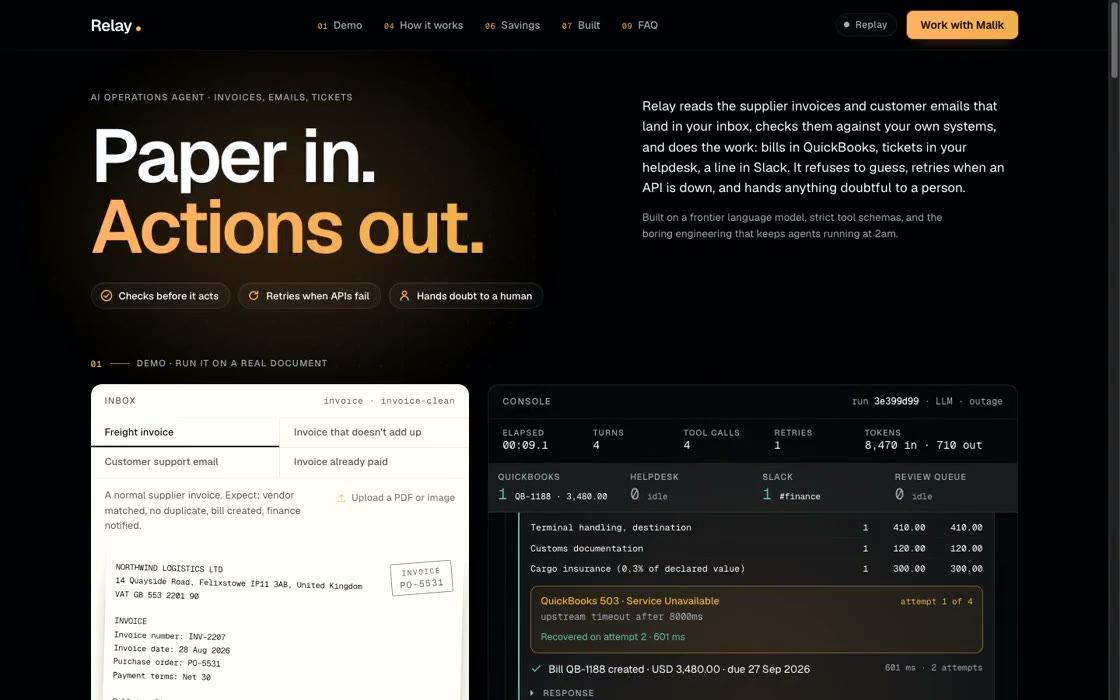
Relay live
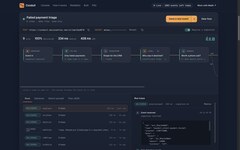
Paper in. Actions out. An AI operations agent that turns invoices and emails into QuickBooks bills, helpdesk tickets and a line in Slack.
18 projects →Systems that do the work. Not a chatbot that answers and stops.
Payments, payouts, terminals, dispatch, maps, messaging, ledgers.
Within 24 hours: an honest read on approach, timeline, cost.
hello@malikakhtar.dev
WhatsApp +92 313 8350598
Karachi, Pakistan · UTC+5
Open to new projects · replies within 24 hours
10 years of software engineering: web apps, mobile apps and the back ends behind them. The last few shipping LLM systems into real business software. Not a chatbot that answers and stops.
Pick a problem. This is the shape of the read I'd send back within 24 hours.
RE: CRM ↔ accounting sync
RE: Invoices & documents
RE: An assistant on your own data
RE: API integrations
RE: A web or mobile app
RE: Payments & checkout
RE: A self-service kiosk
RE: Email that has to land

I've spent ten years building software for people who need it to work on Monday morning, not just in the demo. More than two hundred and ten projects with a 5.0 average rating on Fiverr, and enough production incidents to know what actually matters: honest scoping, boring reliability, and code you still own when I'm gone.
For the last few years that has meant putting LLMs to work inside real business systems — agents that read documents and take actions, assistants that answer with sources, integrations between tools that were never meant to talk. I like the unglamorous parts: retries, rate limits, logging, the monitoring that keeps a system running while you sleep.
I work from Karachi with clients in the US, UK, EU, Australia and the Middle East, overlapping US mornings and EU afternoons. You'll get written updates without asking, a realistic estimate, and a straight answer — including "you don't need AI for this" when that's the truth.
A short scoping call before any estimate. I would rather tell you the project is simpler than you thought than take a bloated budget.
Error handling, logging, and monitoring from day one, not after something breaks. Realistic estimates, fixed scope, clear milestones, no surprise invoices.
Documented, structured, yours. No lock-in, no black box, and support after delivery — I don't disappear at handover.
I tell you when AI is the wrong tool. Sometimes a 40-line script beats an LLM: cheaper, faster, deterministic — and I say so even when the AI version would bill more hours.
Thirteen you can open, in the order I would show them to you. Four more are shown in screenshots, and one I can only describe: that client work stays private, so I show the shape of it instead.
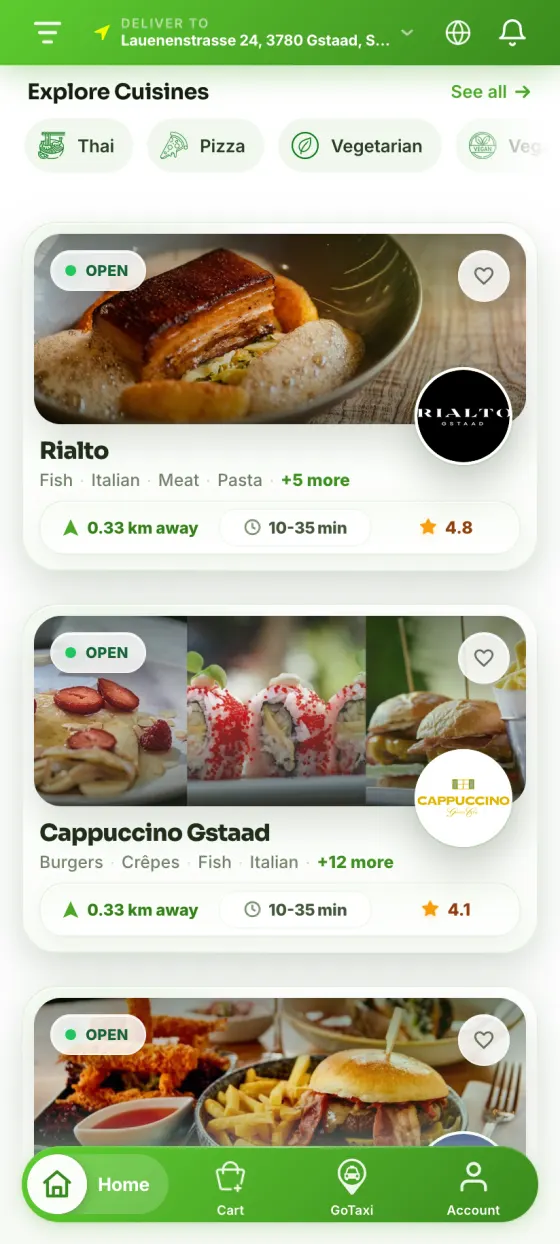
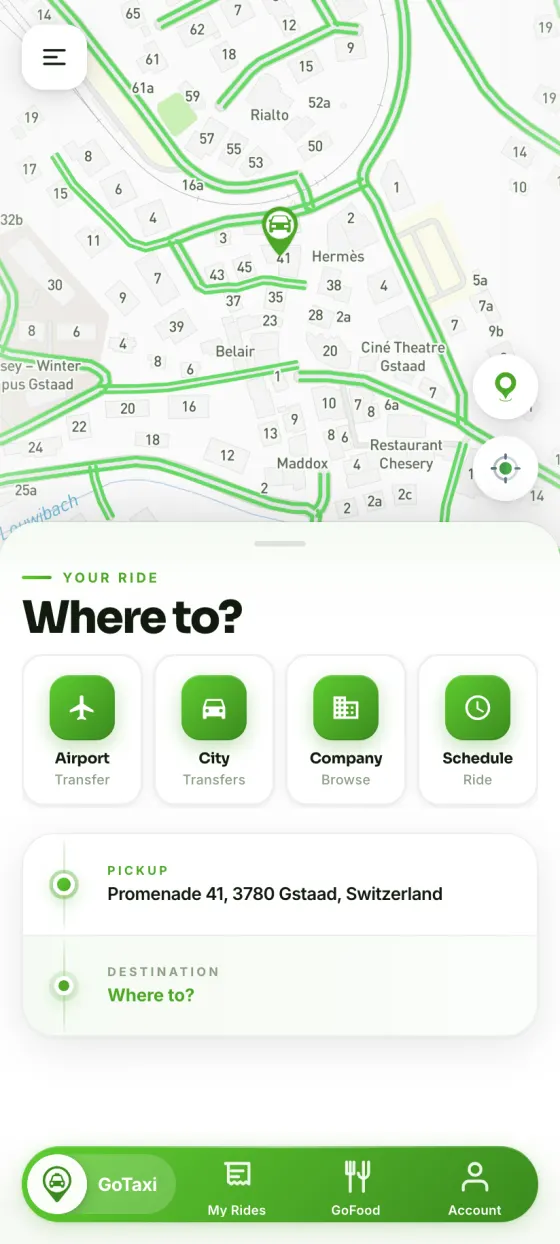
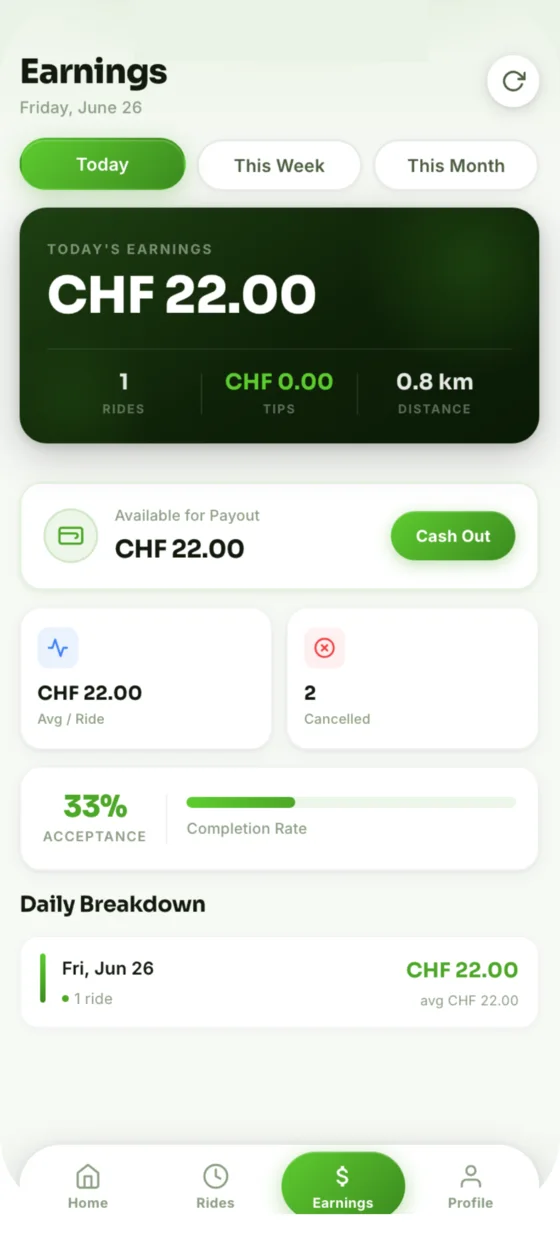
01 Client work · Gstaad, Switzerland live
A ride or a meal. One app, one account.
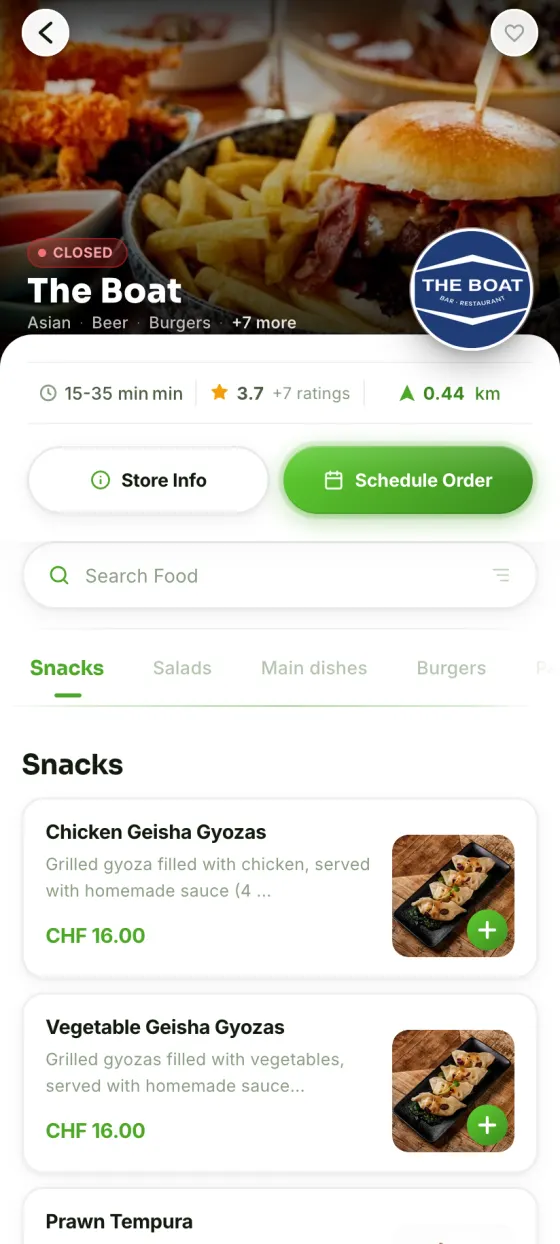
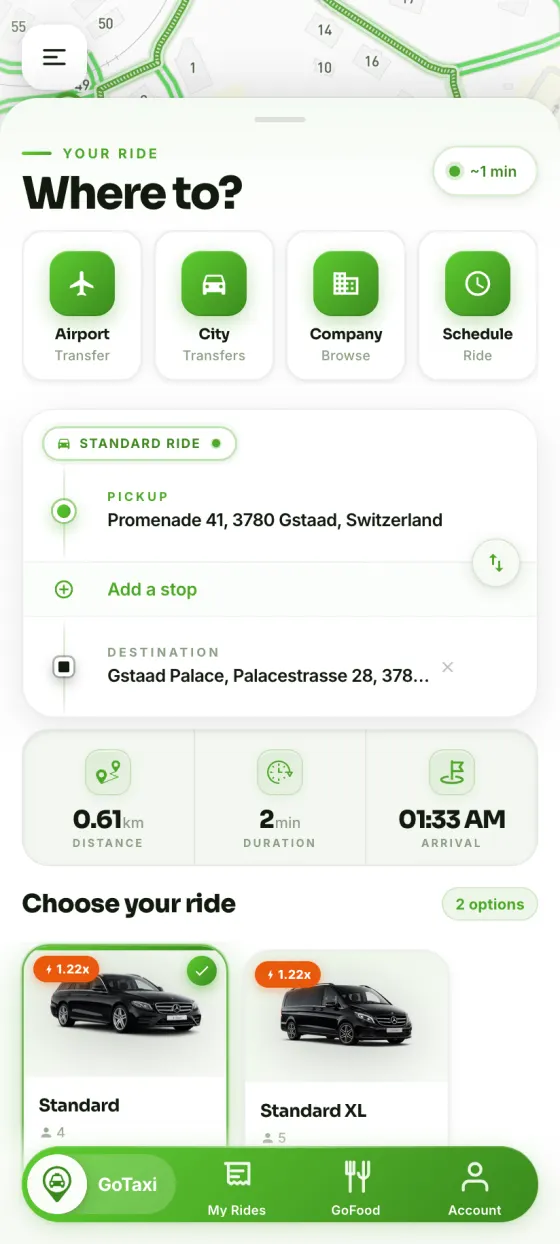
This one is not a demo. It is the taxi and food-delivery service for Gstaad and the Saanenland, running as a real business: a customer app on iOS and Android, a separate app the drivers work from, and the backend holding the two together. Order from a local restaurant and watch it come, or book a taxi with the fare agreed before you confirm and the driver moving on the map while you wait.
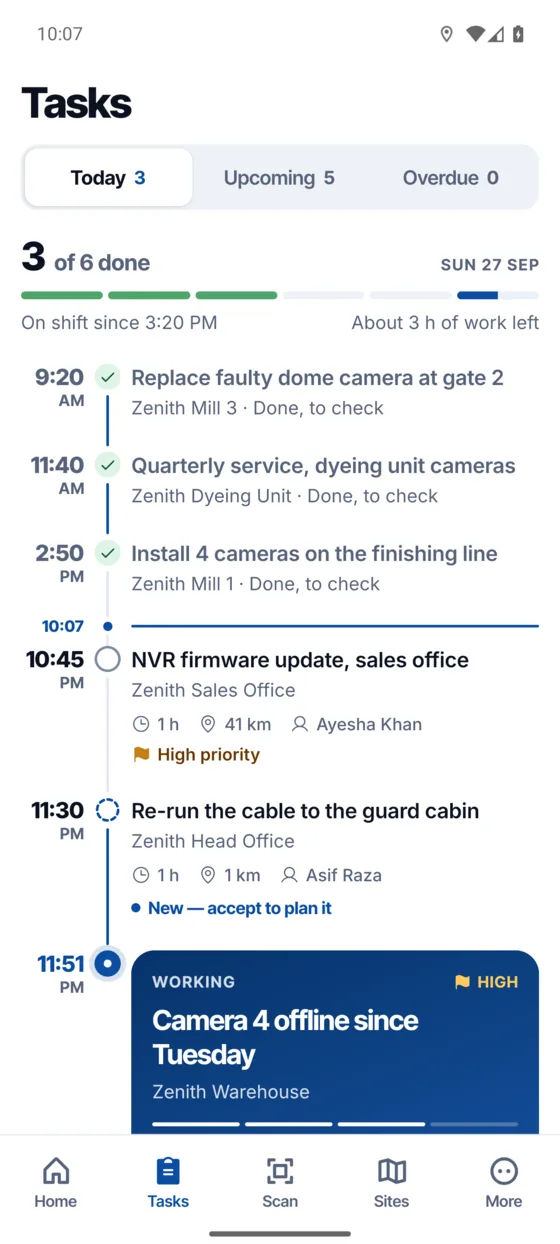
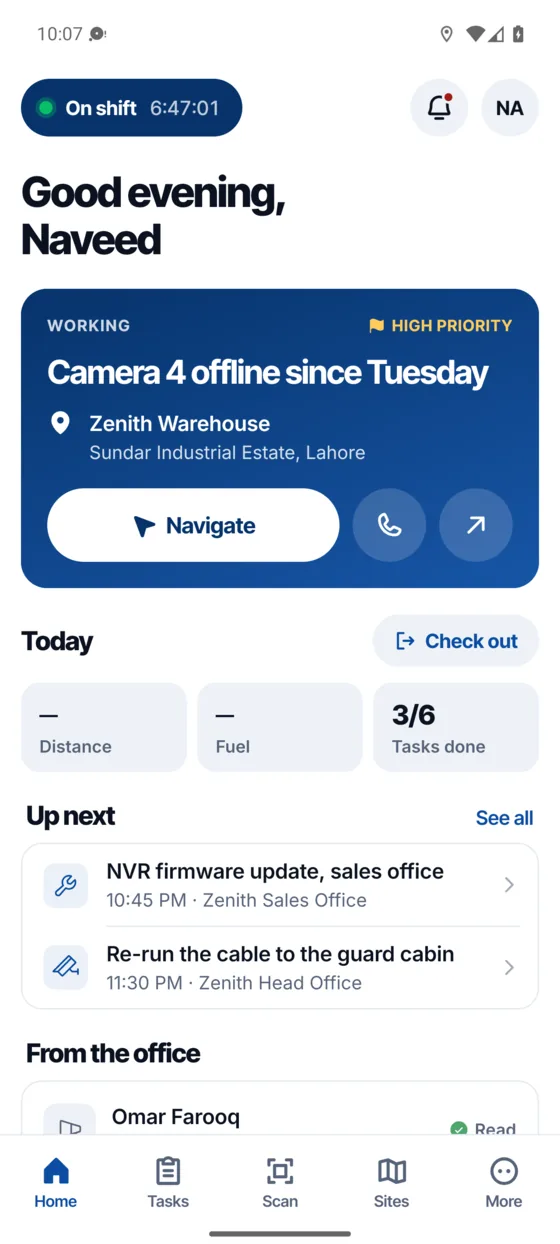
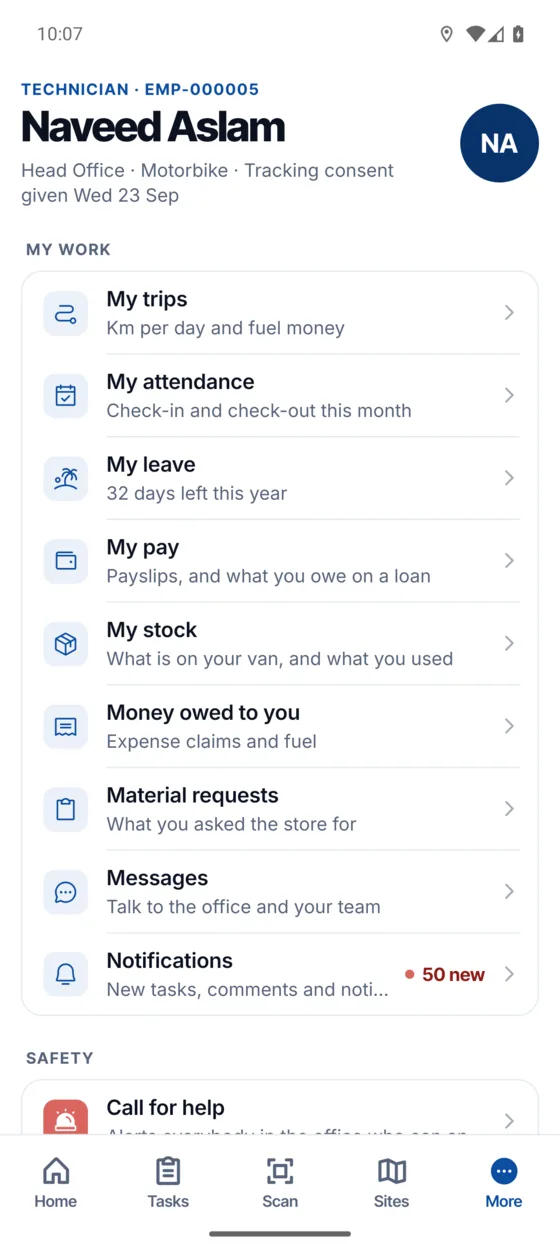
02 Client work · Karachi, Pakistan client testing
Every technician, every site, every rupee. One system.
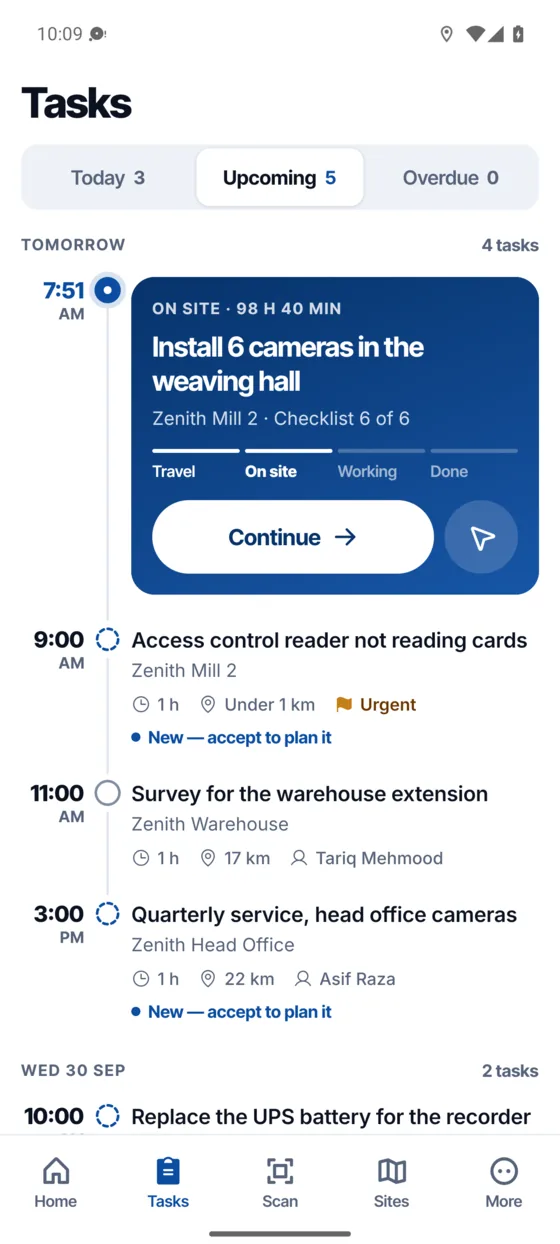
Client work, now in the client’s hands for testing. Gineerz installs and maintains CCTV, networks and access control at client sites in Karachi. This platform replaces their registers, WhatsApp groups, Excel salary sheets and paper challans with one connected system: an Android app the technicians work from, a web back office for the owner, admins, accounts, stores and HR, and a portal for their own clients. The back office runs on staging at tech.gineerz.com, where the company is walking it through a real working day before go-live.
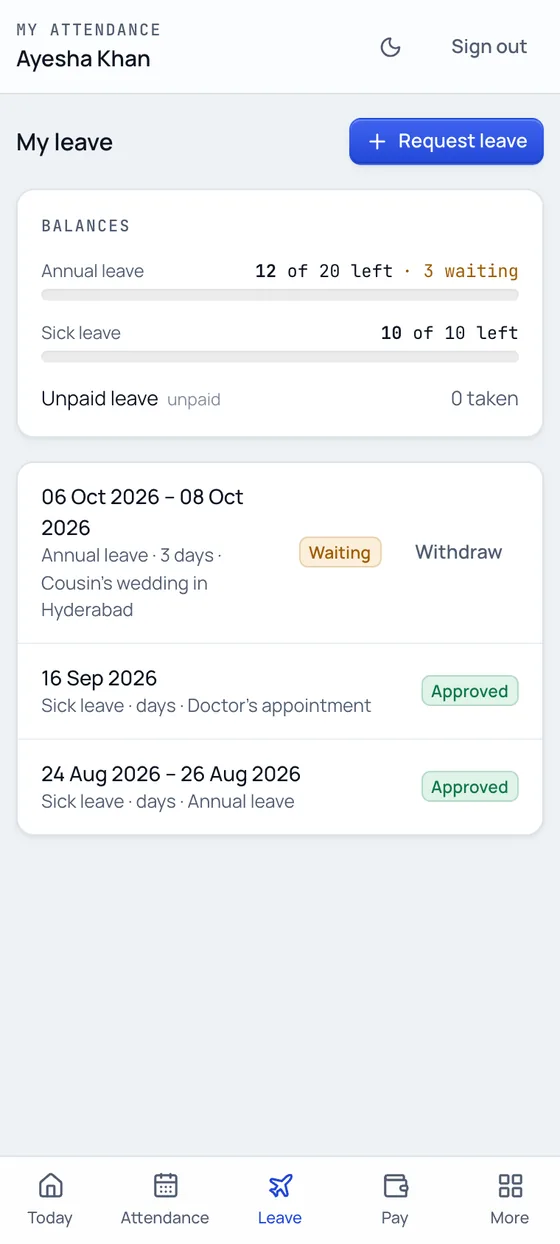
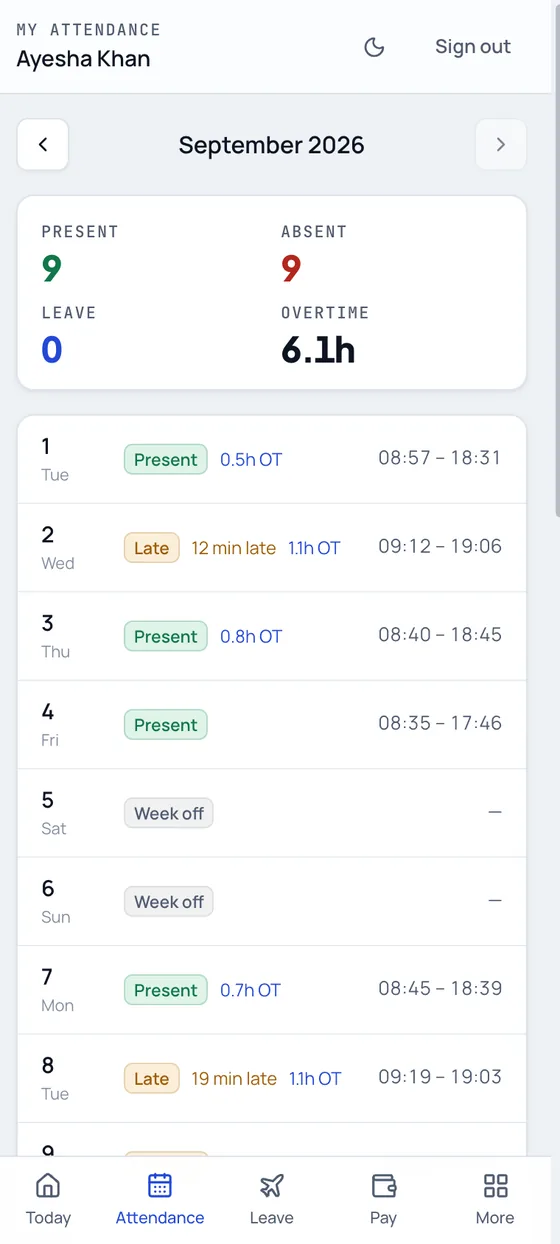
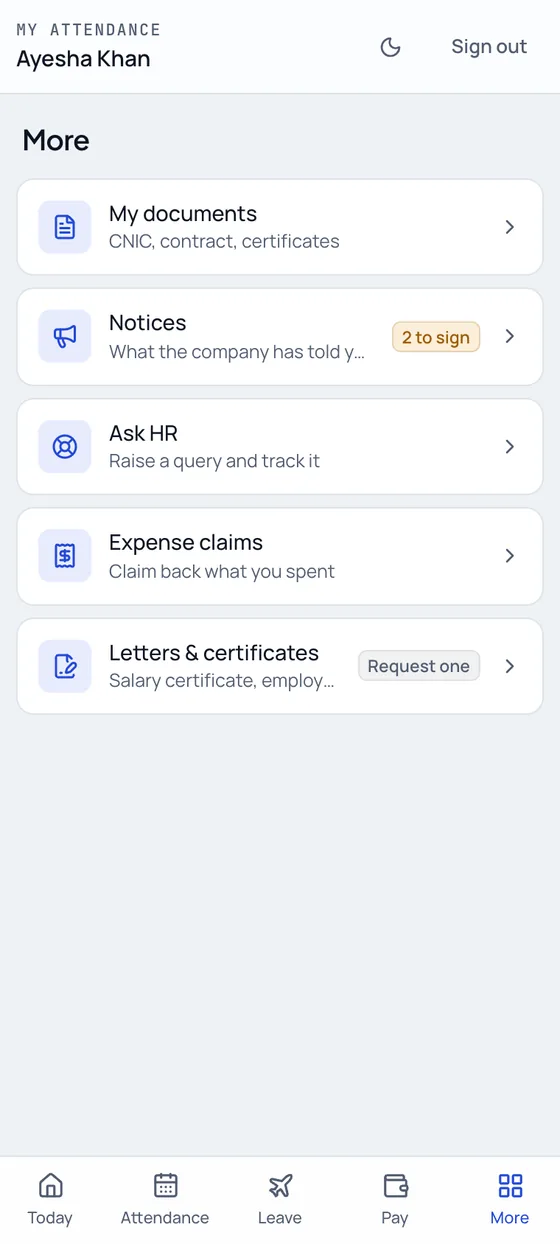
03 Own product · Karachi, Pakistan live
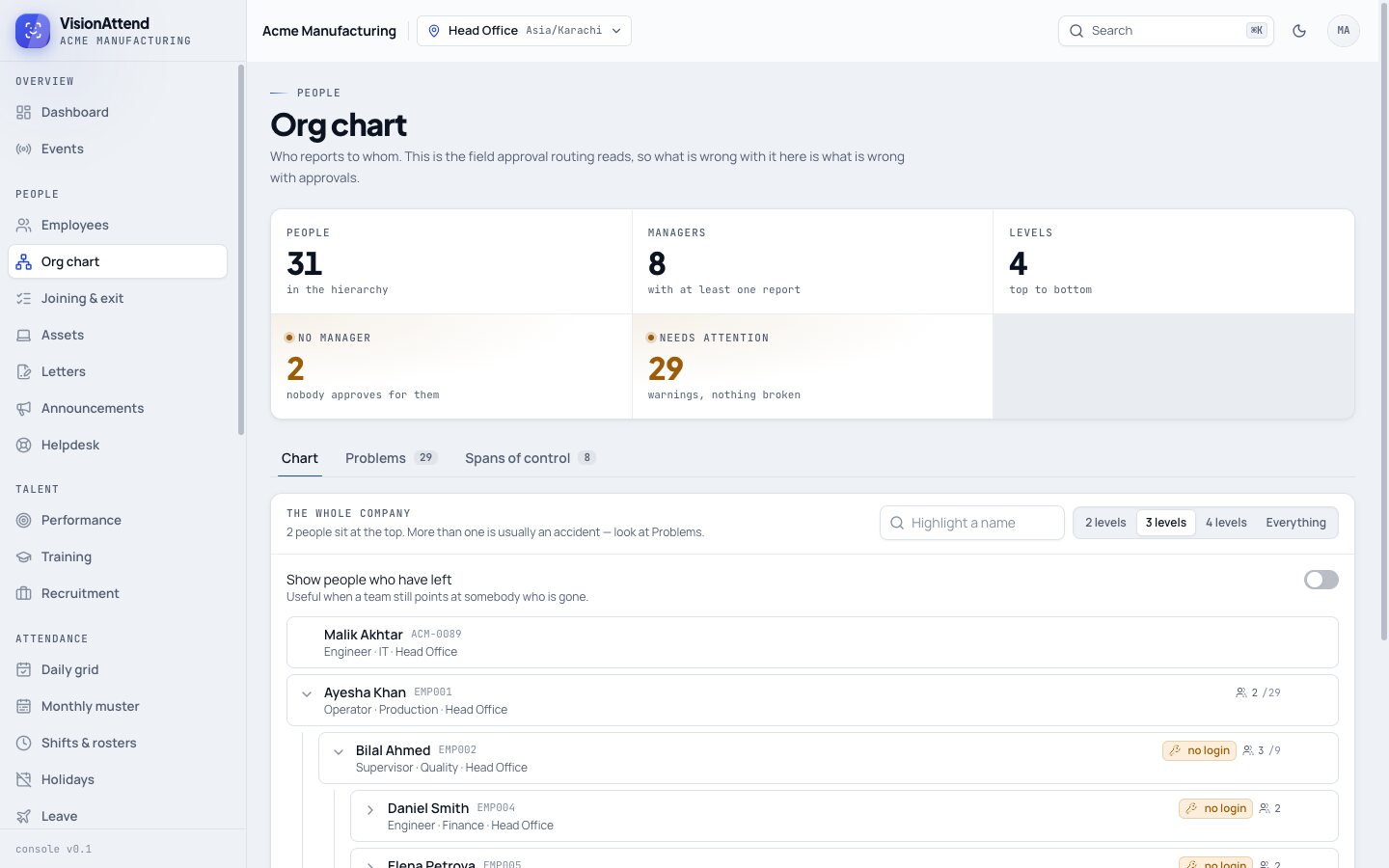
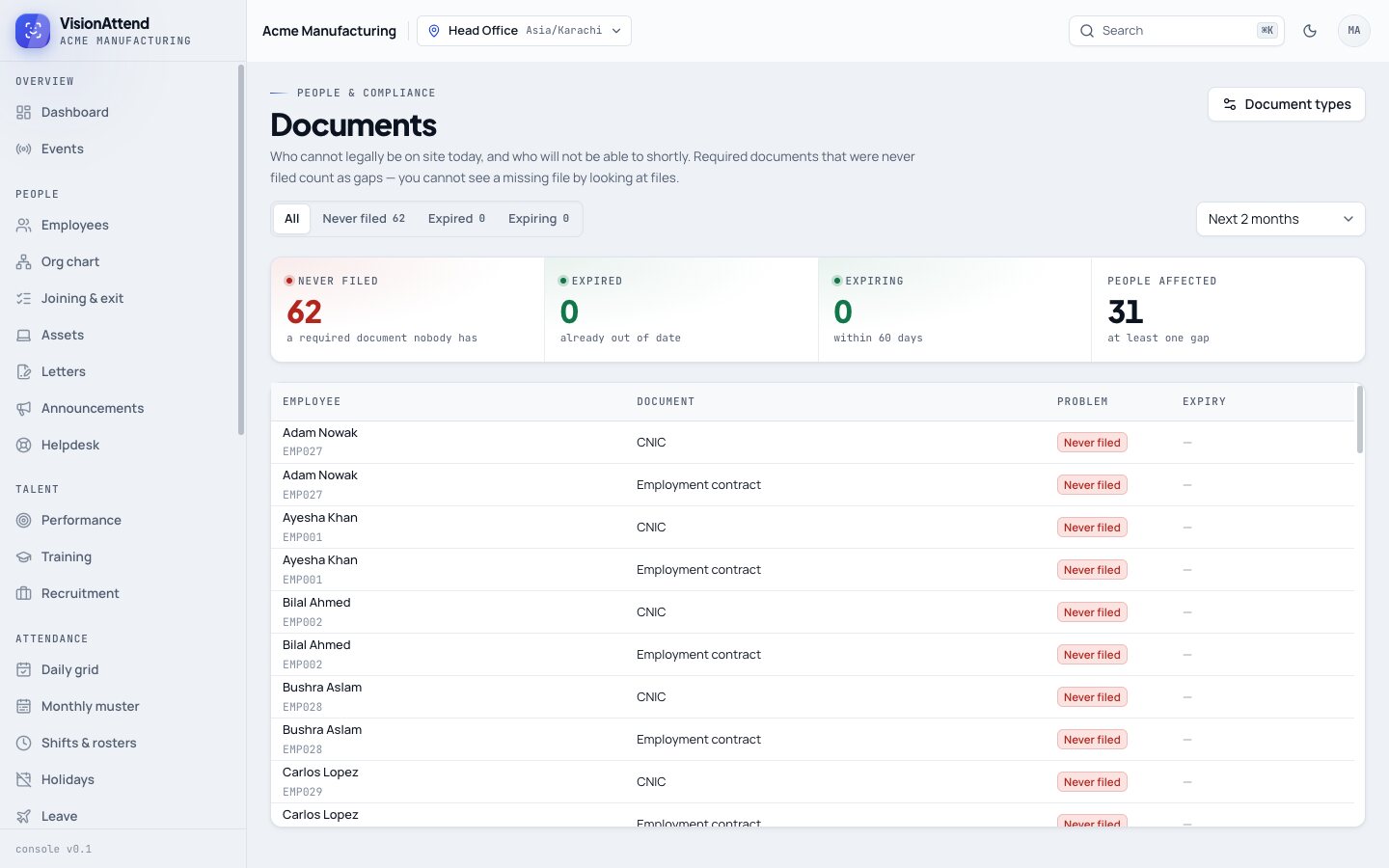
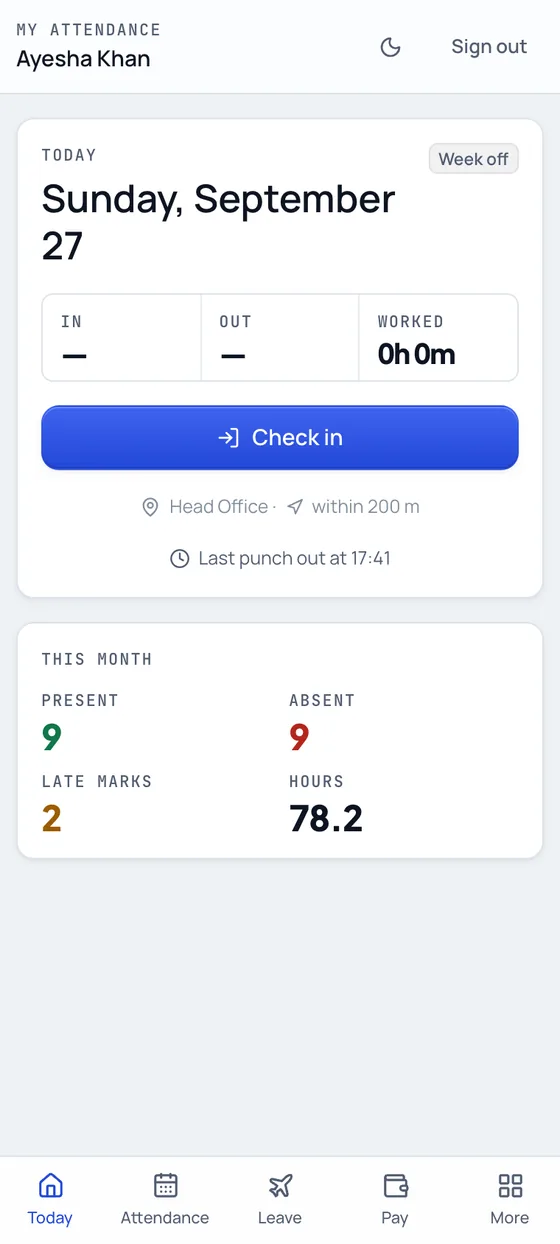
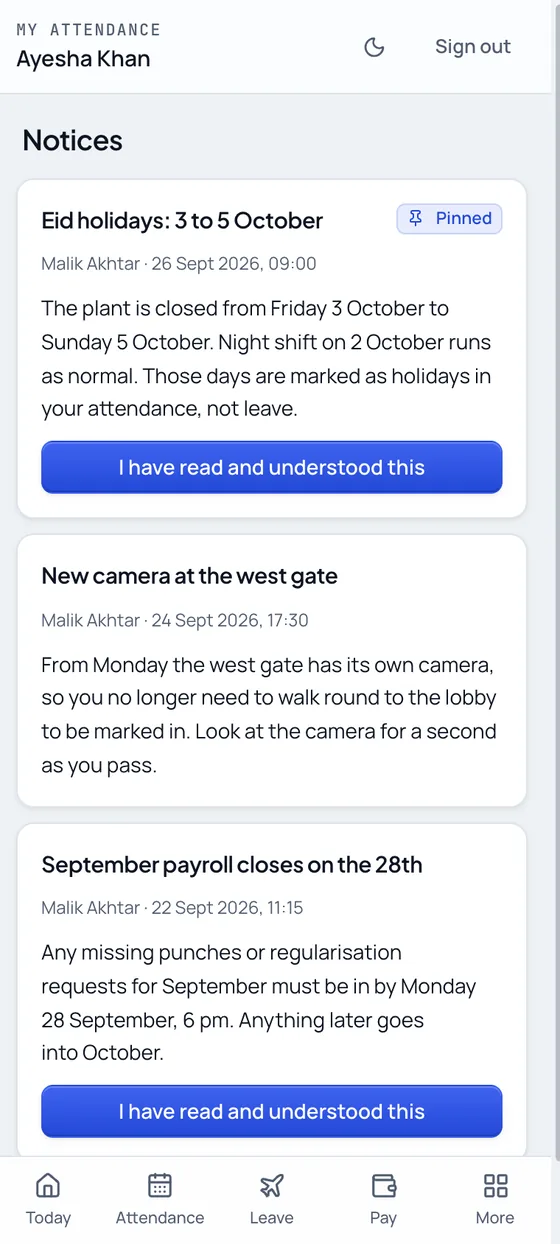
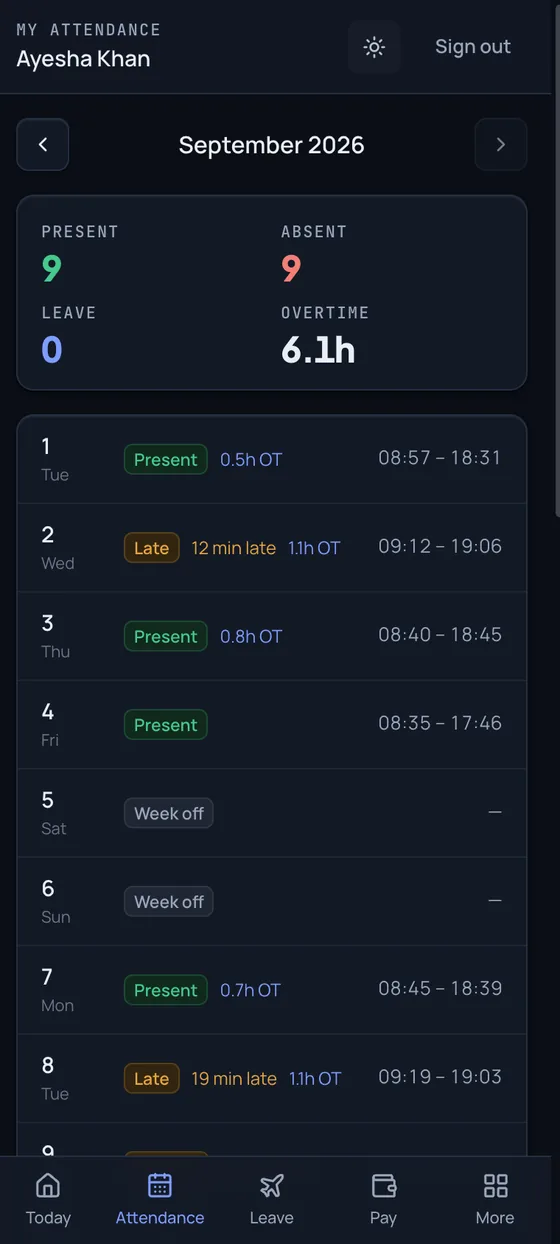
Walk-through attendance from the cameras you already own.
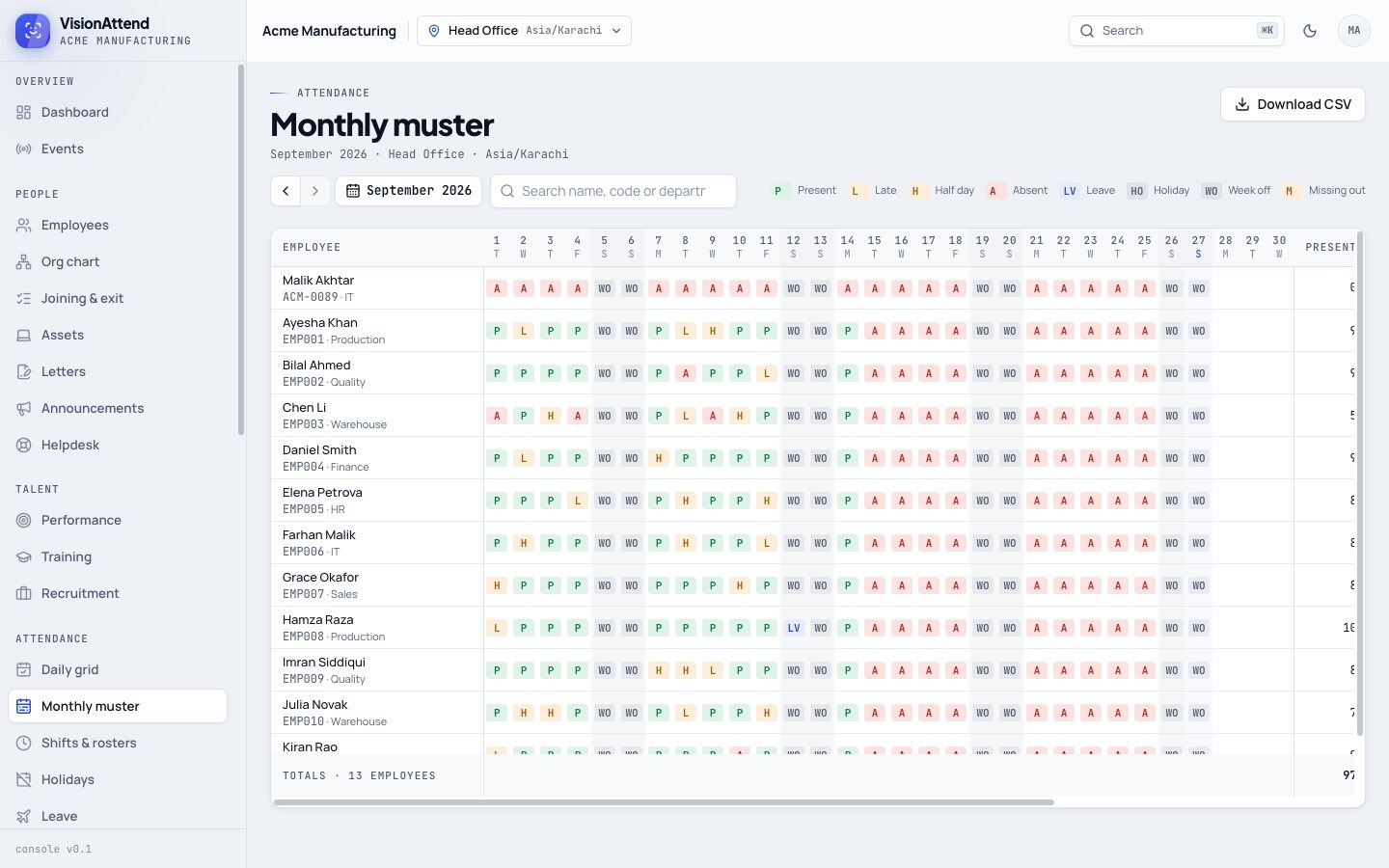
Not a demo either. A camera-based attendance and HR system, sold as a service. A small Site Connector program on a PC the customer already has pulls the CCTV streams, finds faces and uploads the crops; the cloud recognises people, turns sightings into punches, works out each day by the rules (shifts, night shifts, grace, overtime, holidays, leave) and serves the console, the reports and the HR work on top. Employees get a phone-first portal with nothing to install, and there is a platform console to onboard companies on any kind of contract.
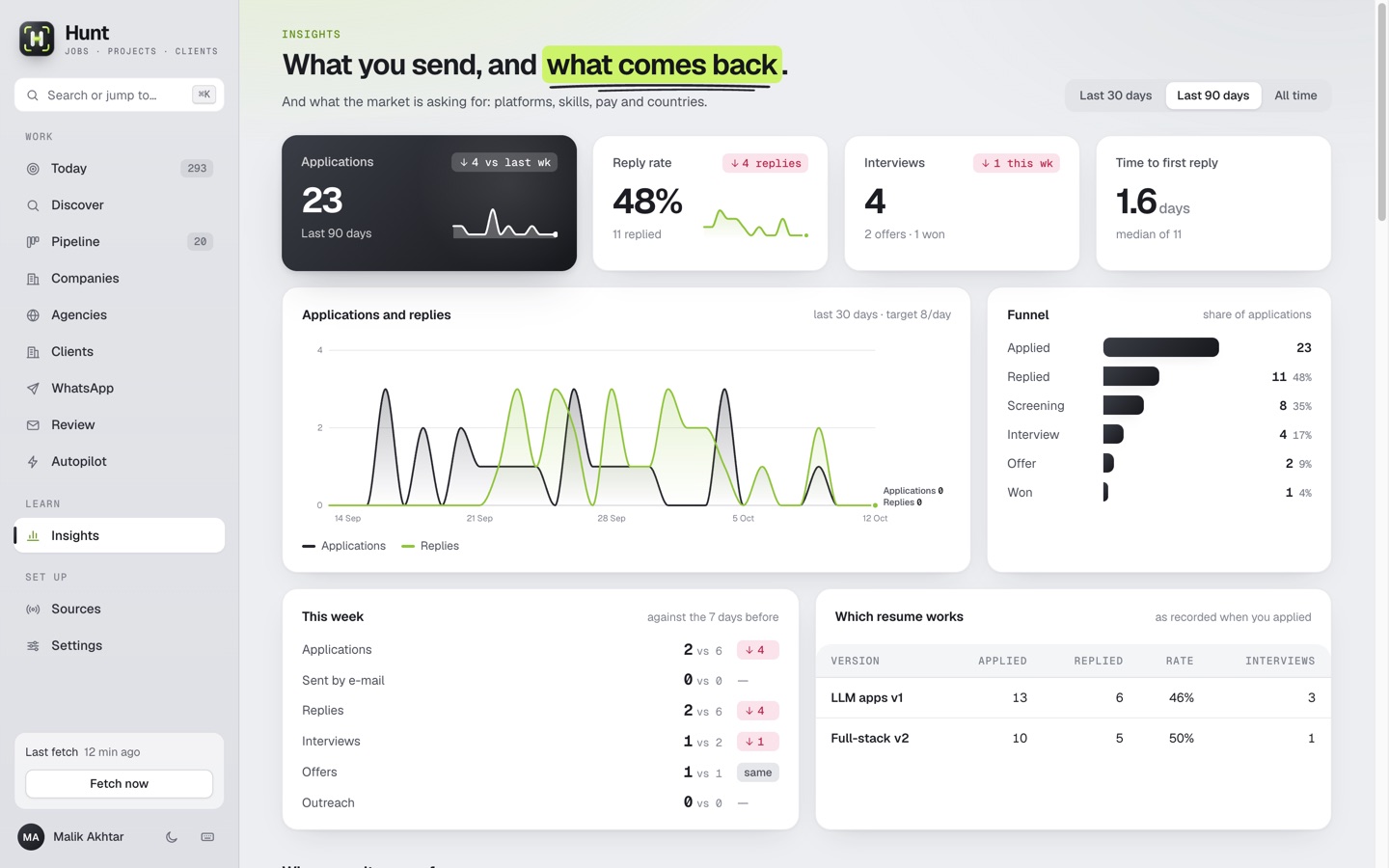
04 Own product · Karachi, Pakistan live
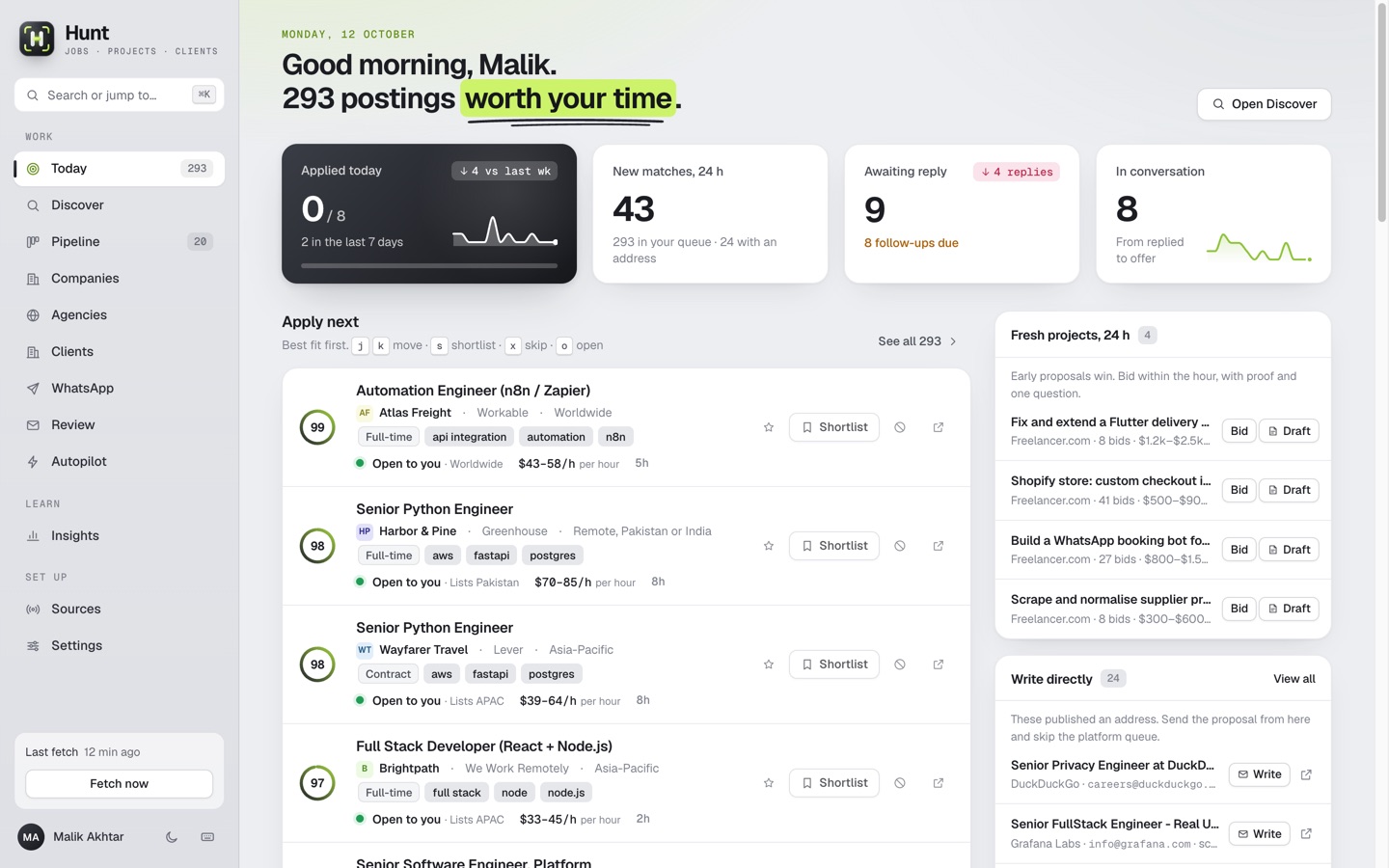
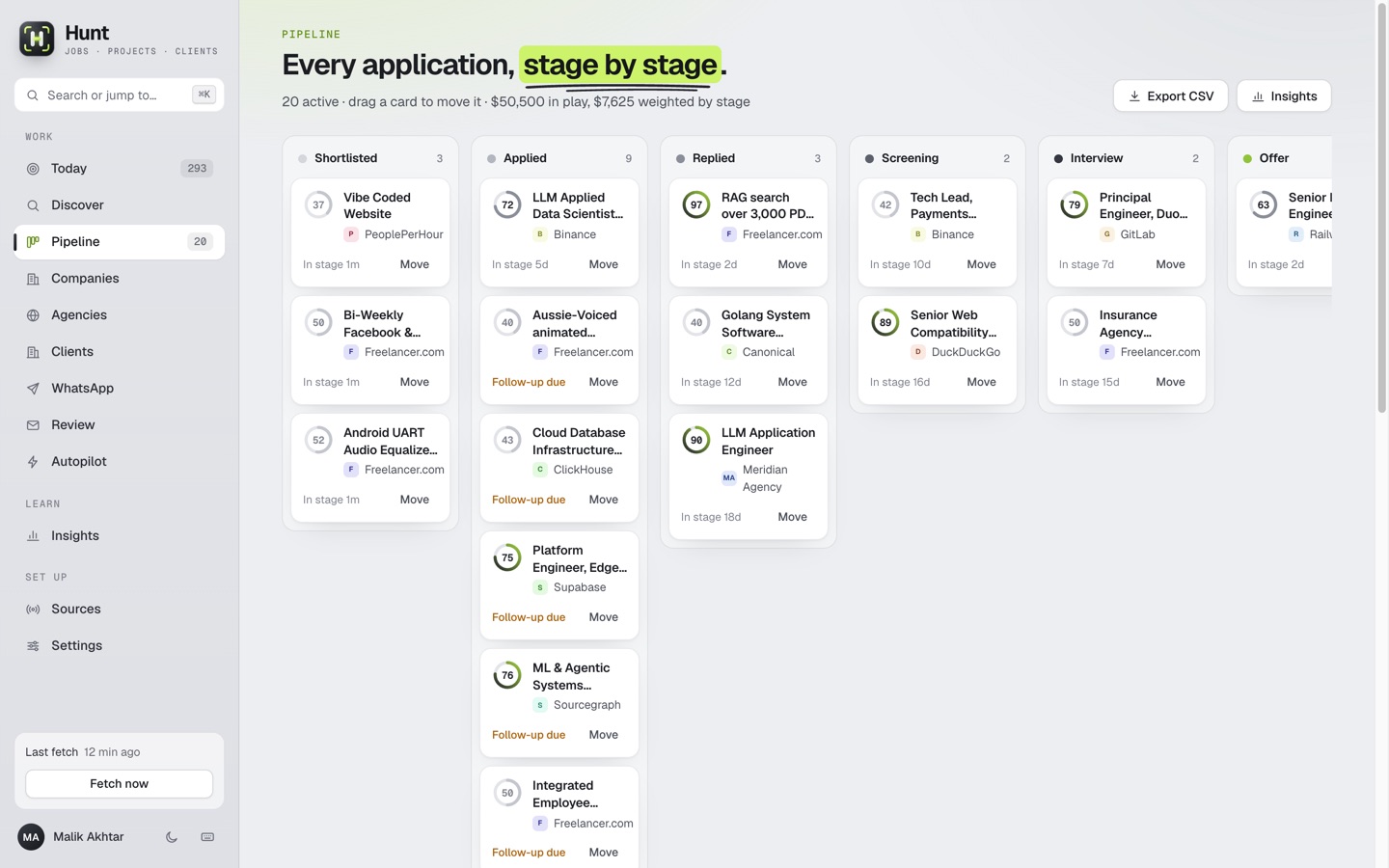
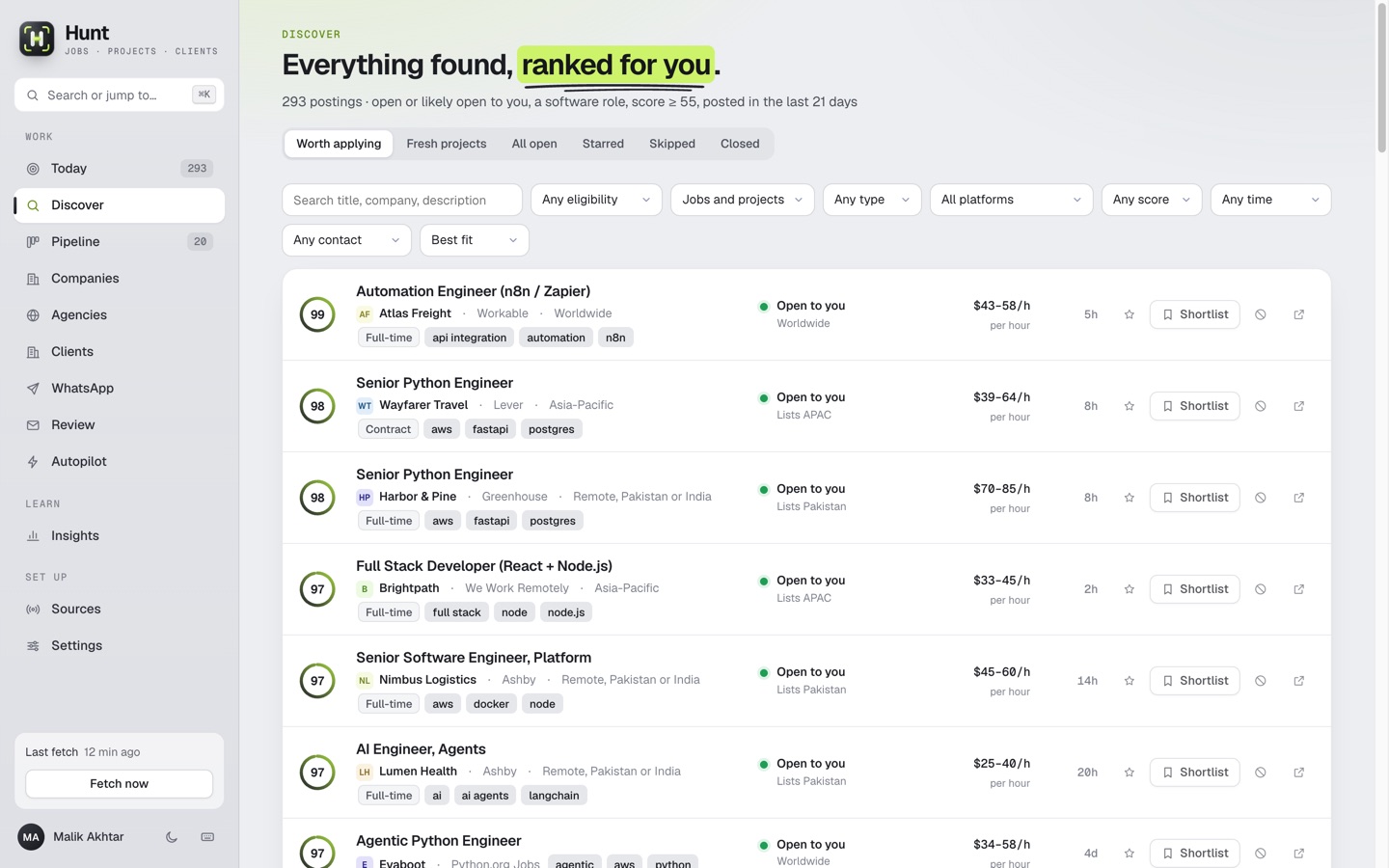
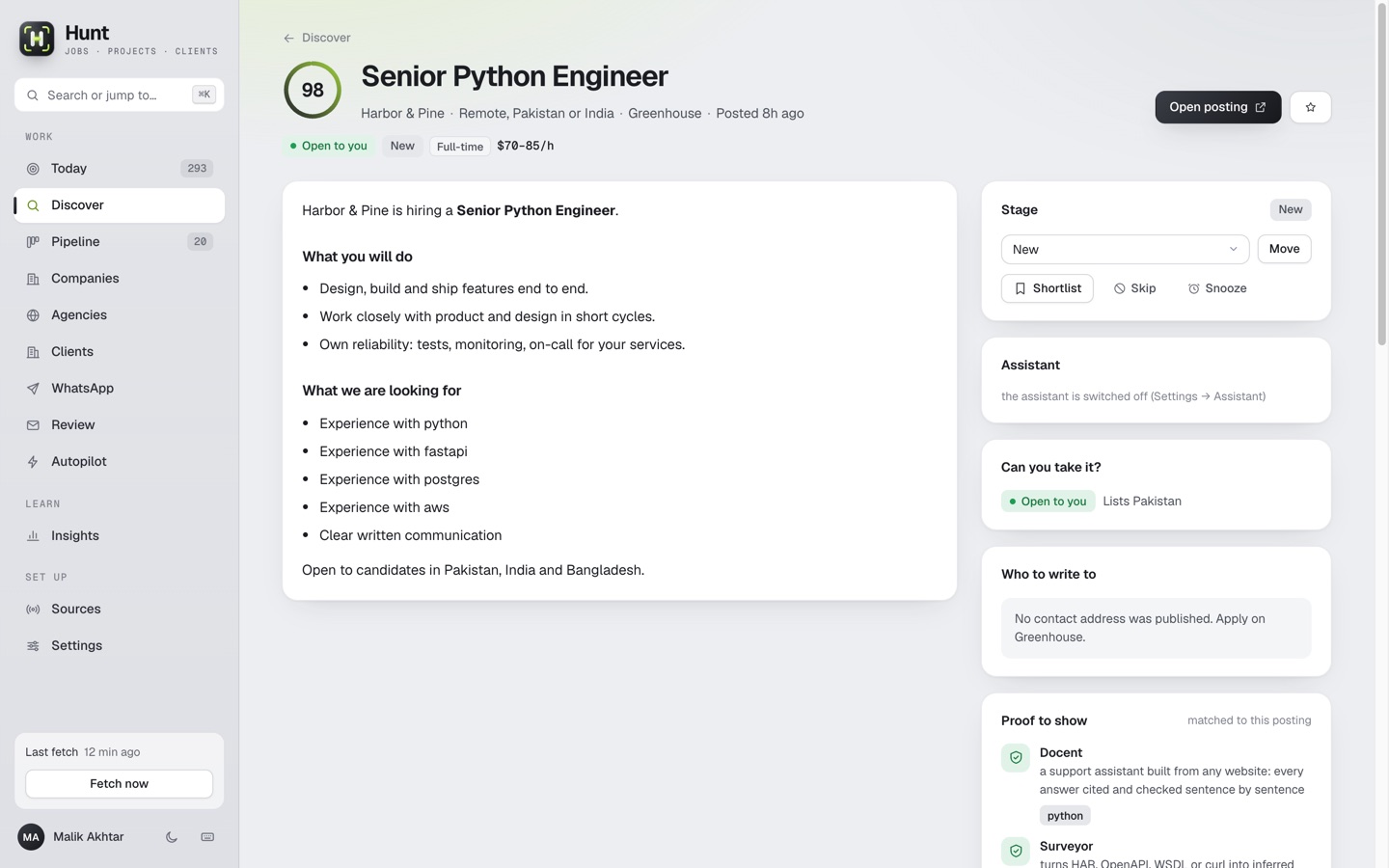
Every remote job, project and client worldwide, ranked for one person.
Not a demo. The system I run every day to find work. It reads job boards, freelance marketplaces, community hiring threads and the careers pages of hundreds of companies, then answers the questions a listing never does: can I take it from where I live, how well does it fit, what should I show them, whom do I write to, and what happened next. One SQLite file, the Python standard library and nothing to install, served from a hardened box behind Cloudflare with a scheduled run every fifteen minutes.
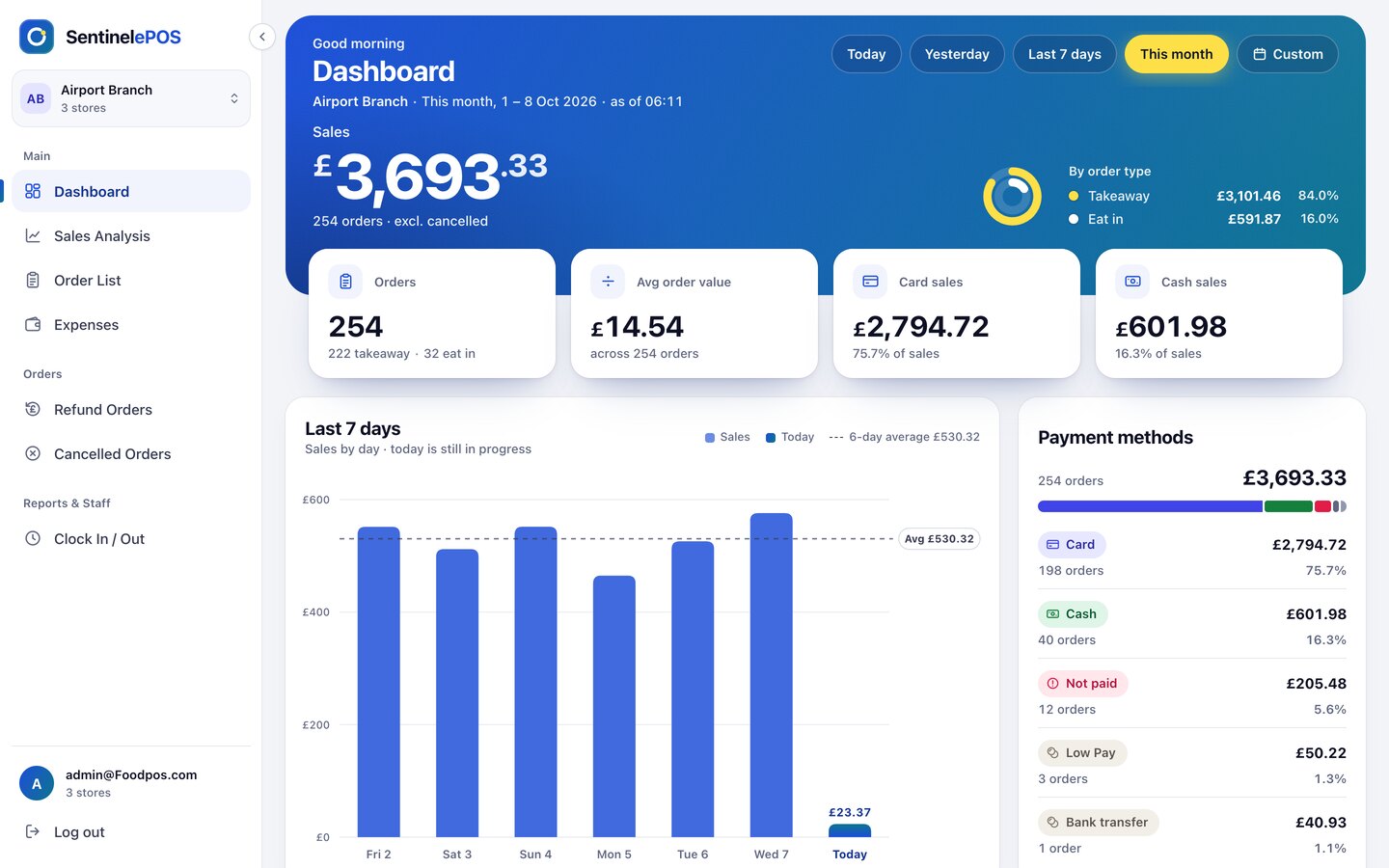
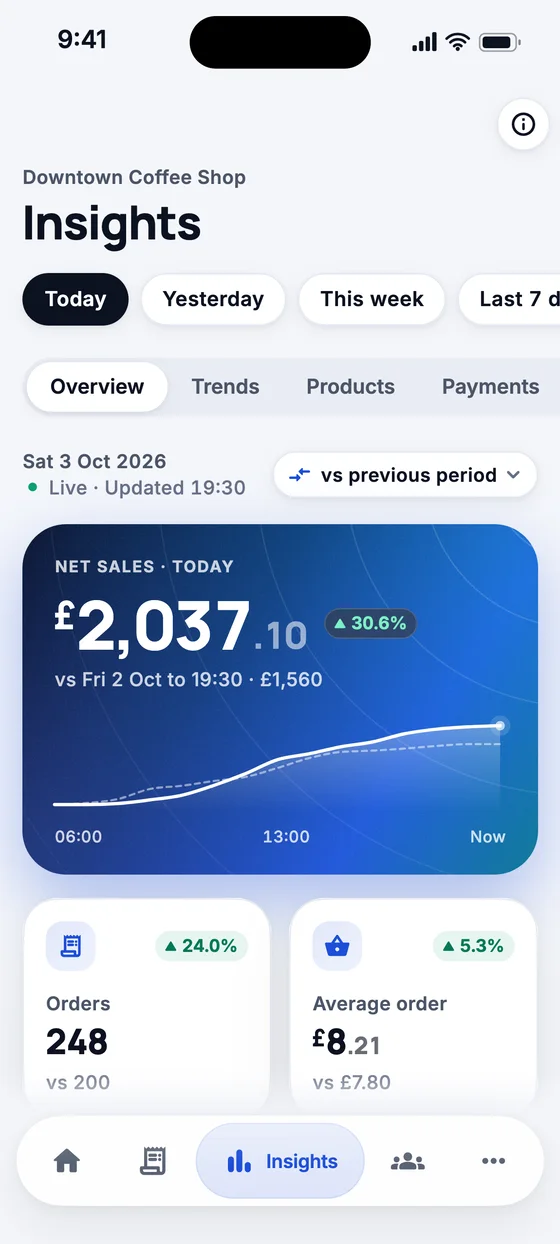
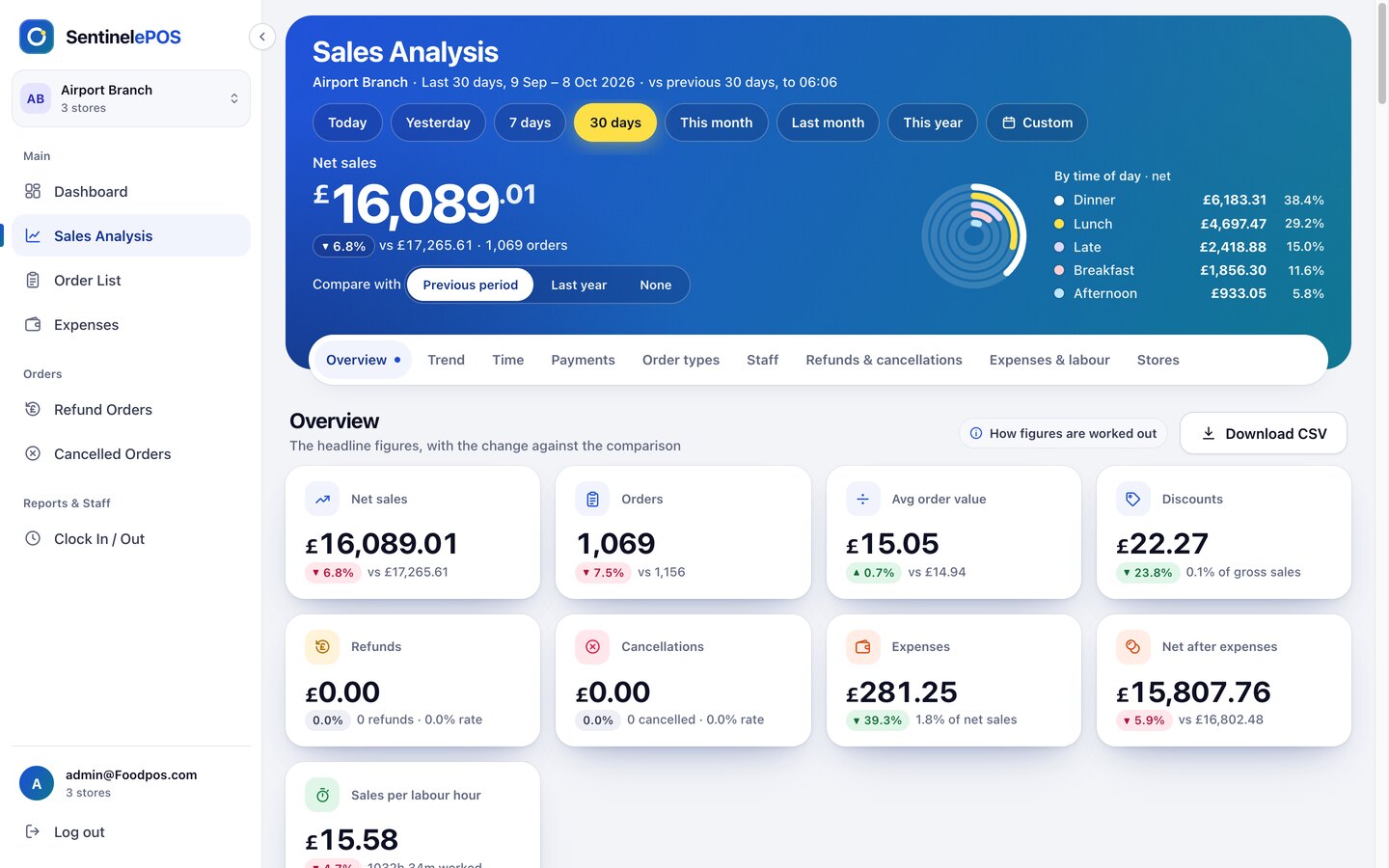
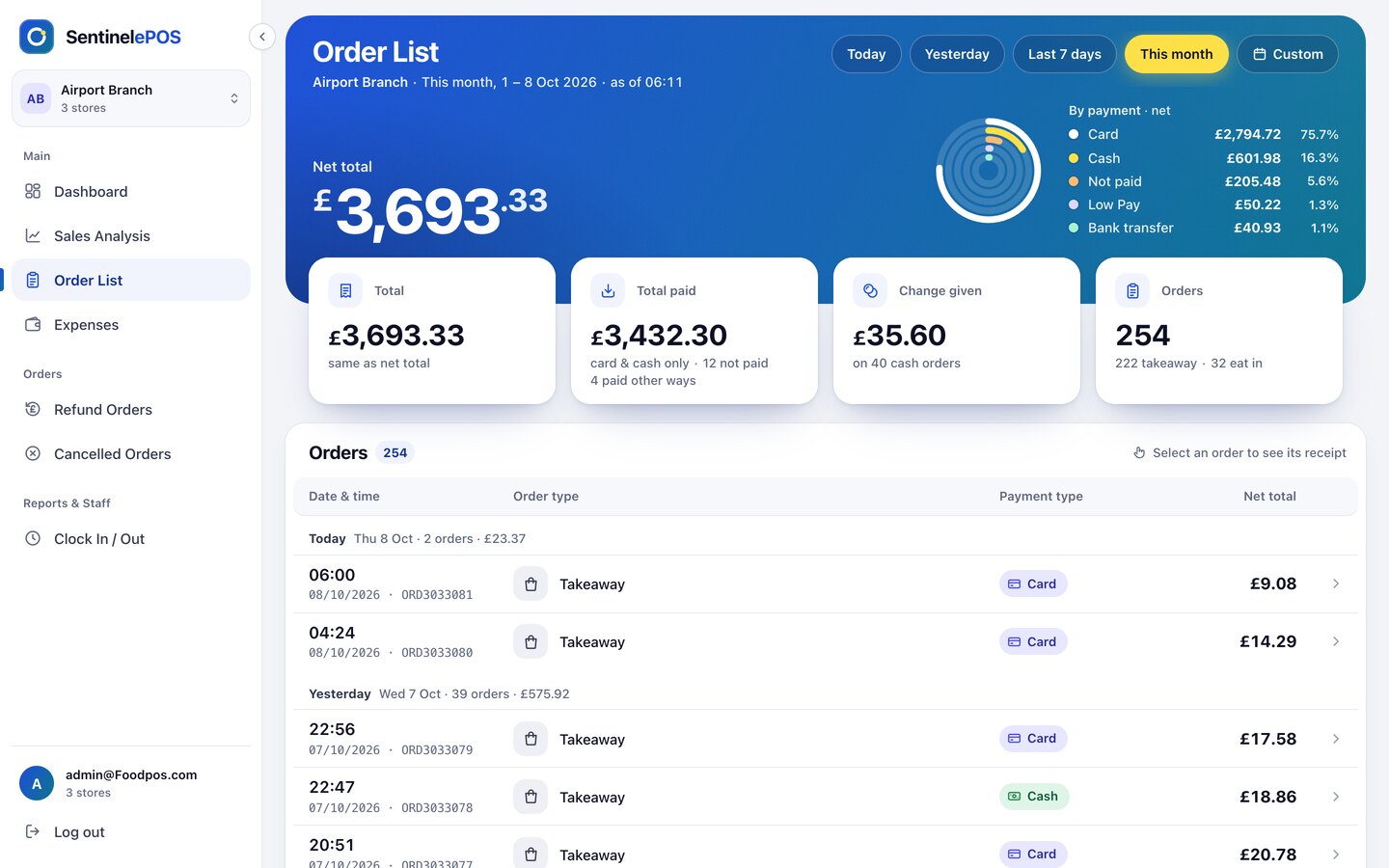
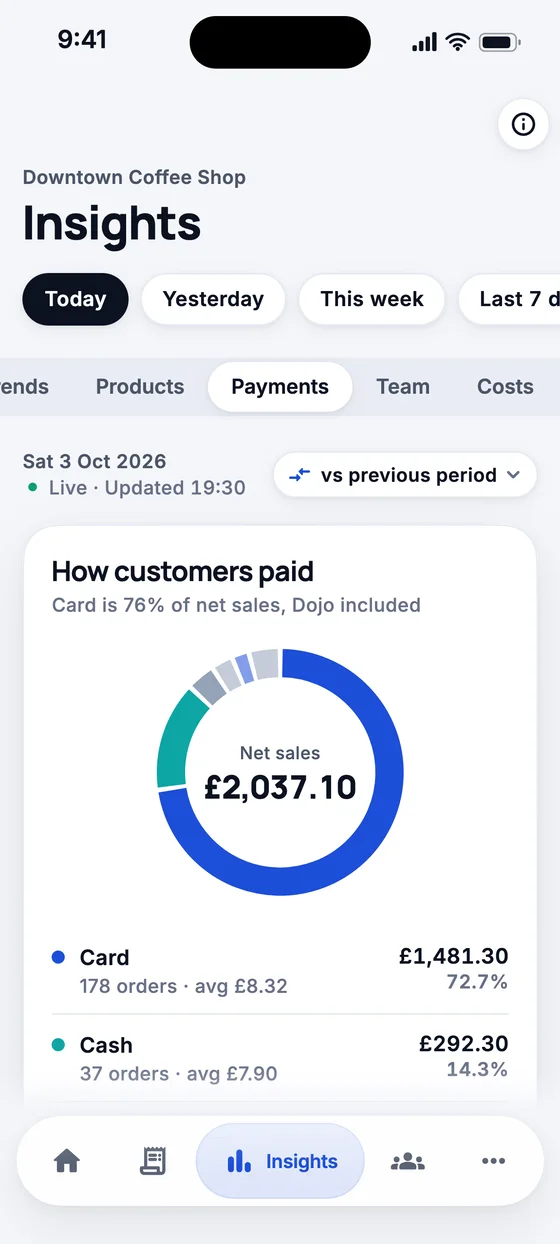
05 Client work · Sentinel EPOS, UK delivered
Your restaurant, at a glance. On the web and in your pocket.
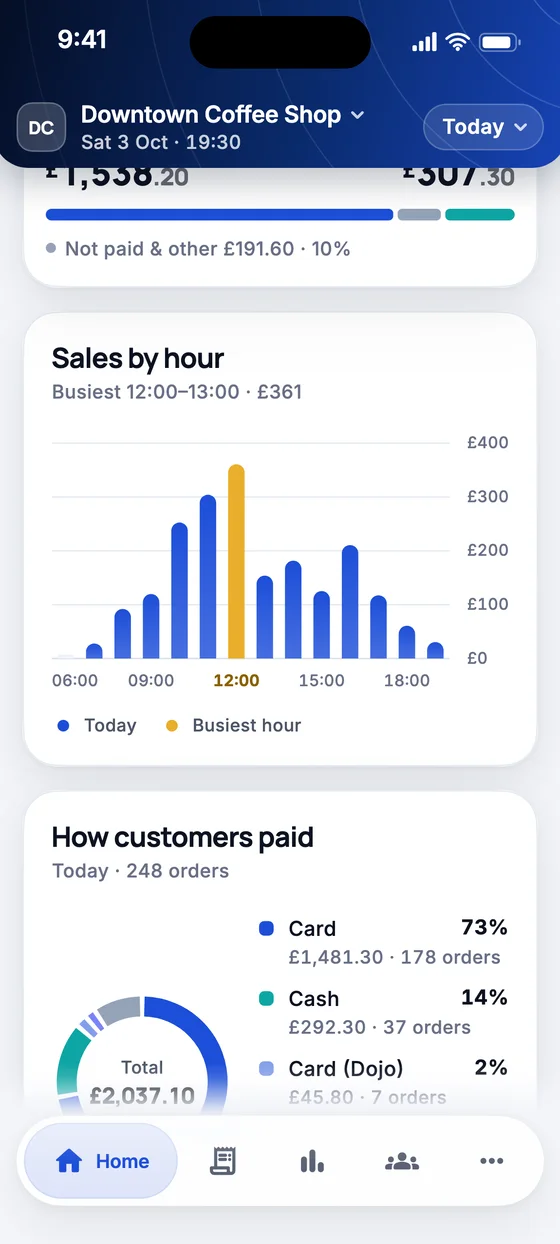
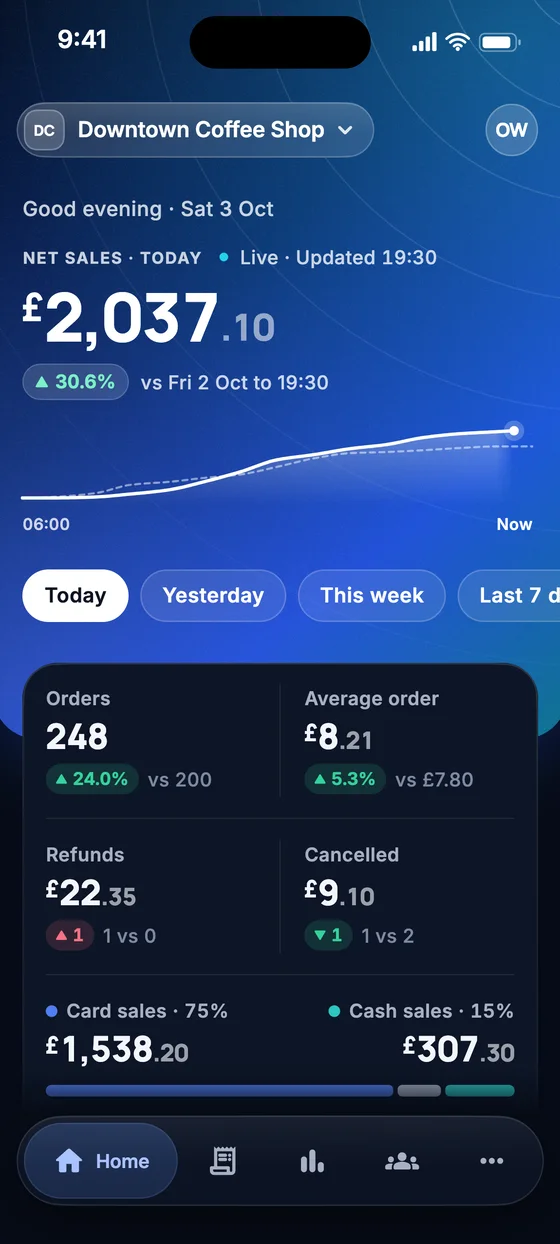
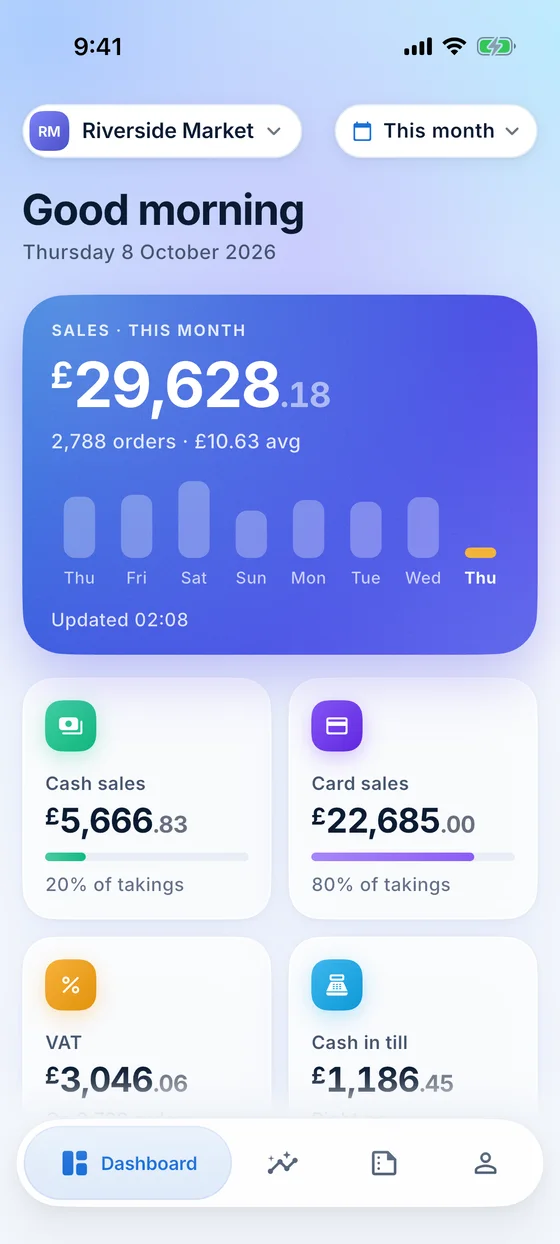
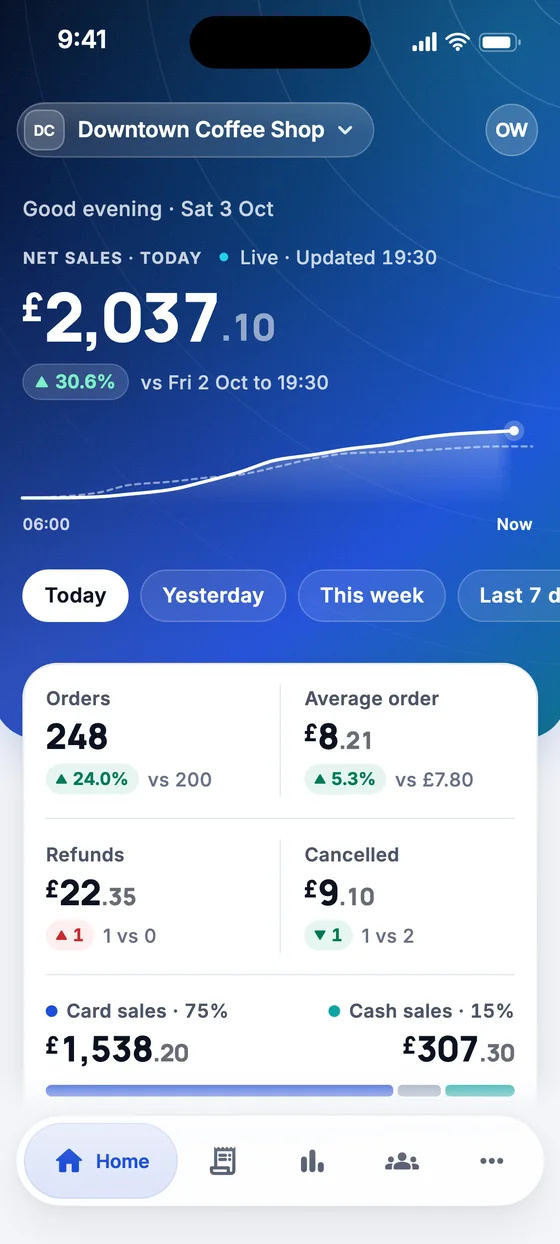
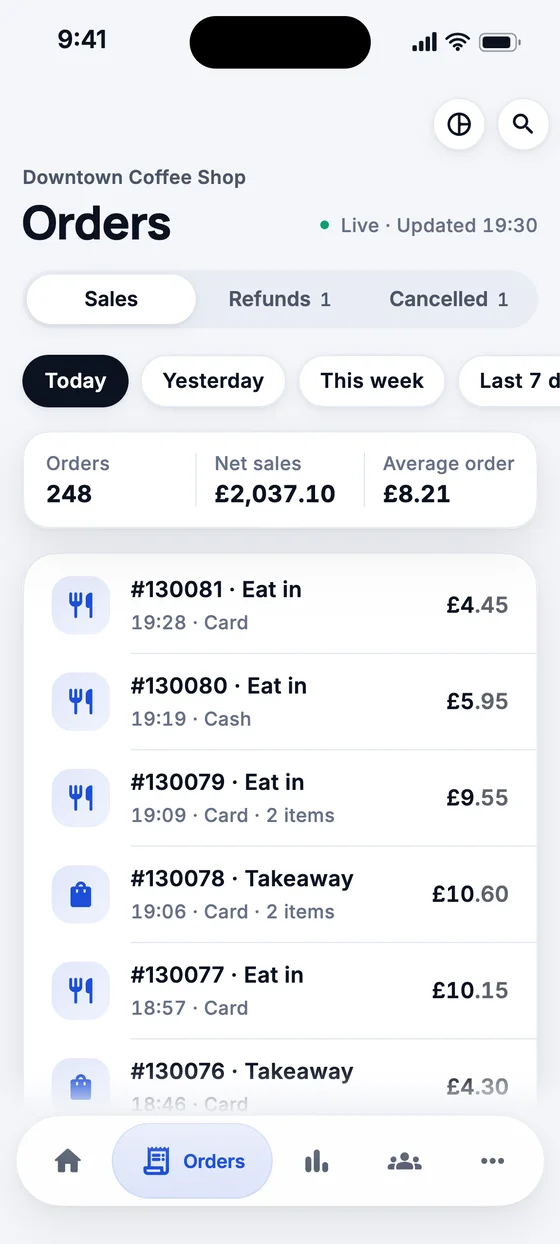
Client work for a UK till-system company. Sentinel EPOS sells the tills; this is the owner’s side of them. A web back office reads the live till database, and an owner app for iPhone and Android brings every page of it to the phone, redesigned for it: today’s net sales, orders, refunds and cancellations, sales by hour, how customers paid, who is on shift, and a receipt for every order, across every store the owner has, with one store switcher and one period shared by every screen.
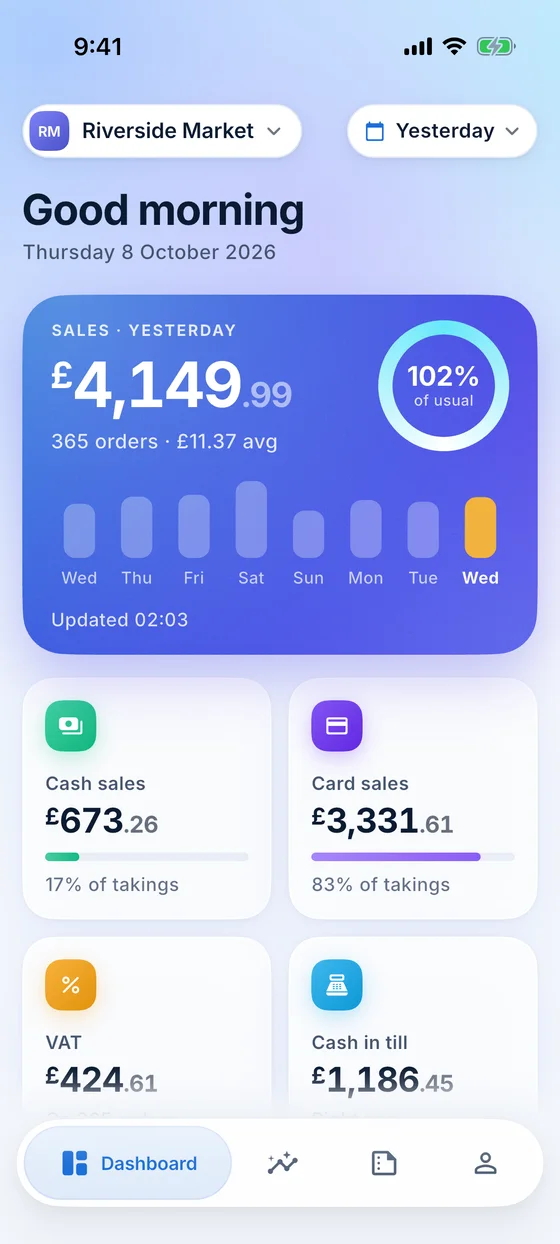
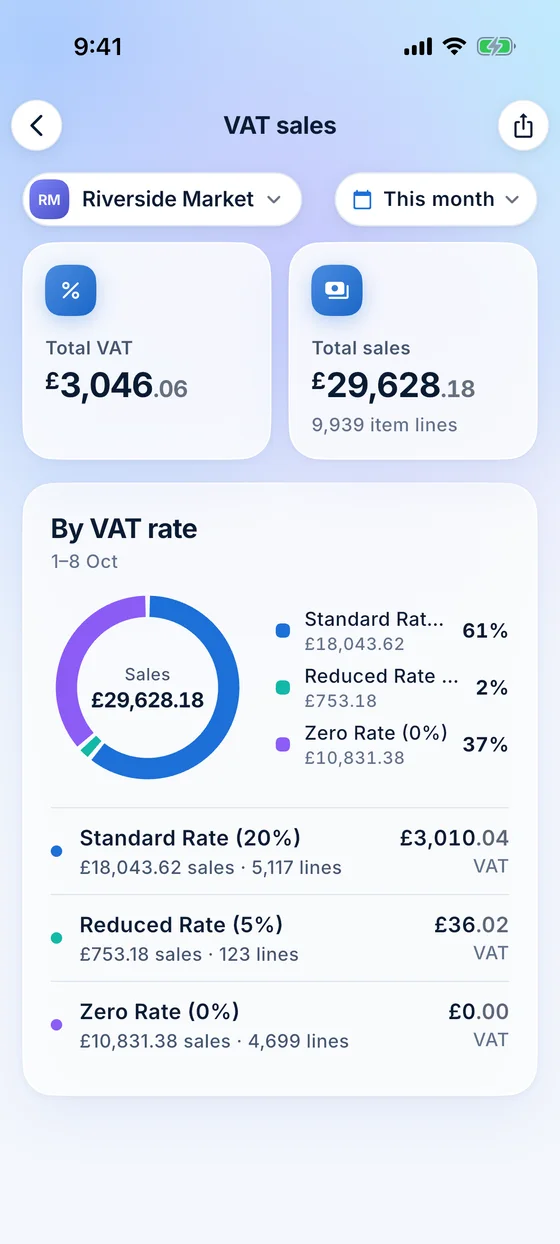
06 Client work · Sentinel EPOS, UK delivered
Every till, every VAT rate, every shift. Exported in a tap.
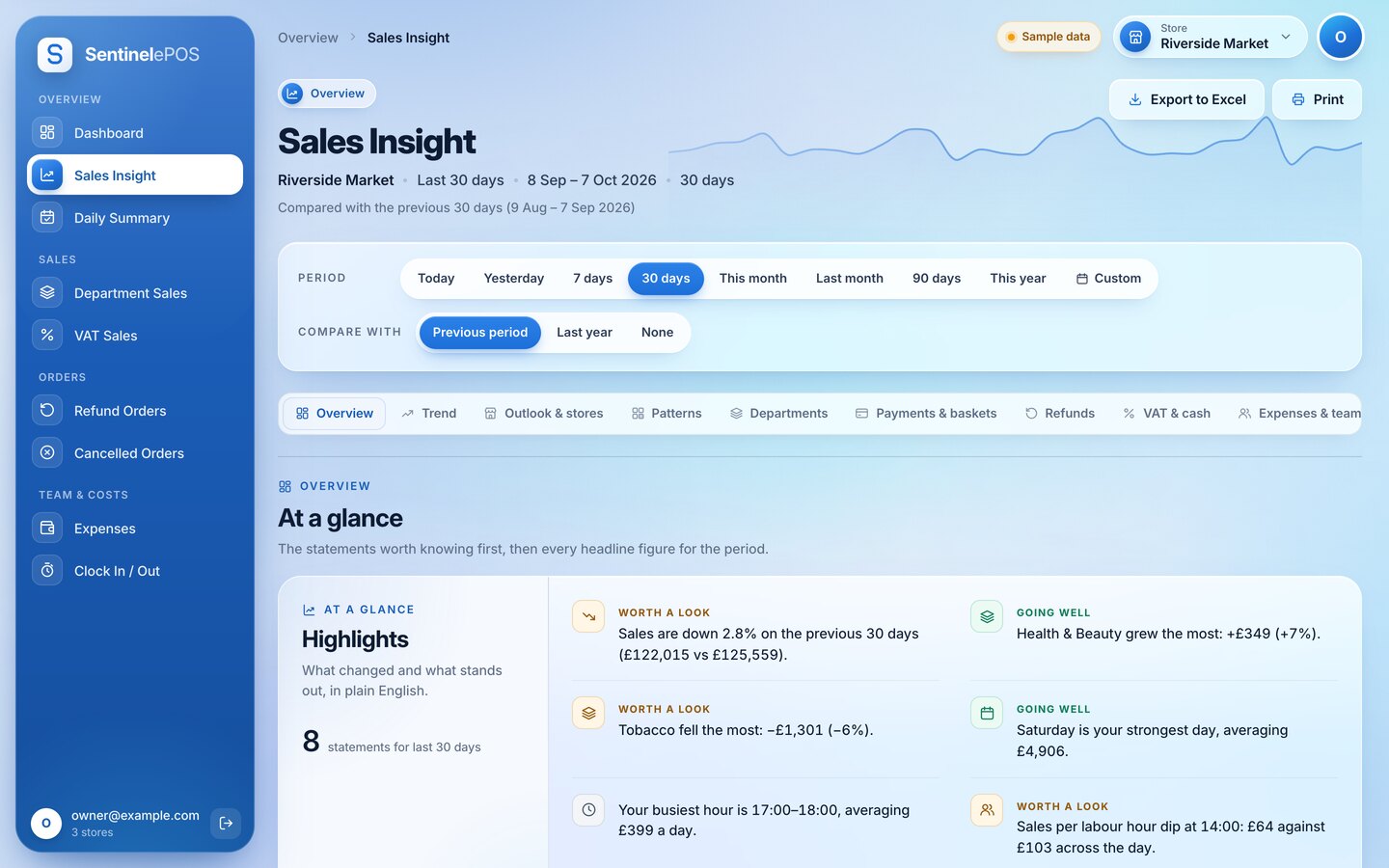
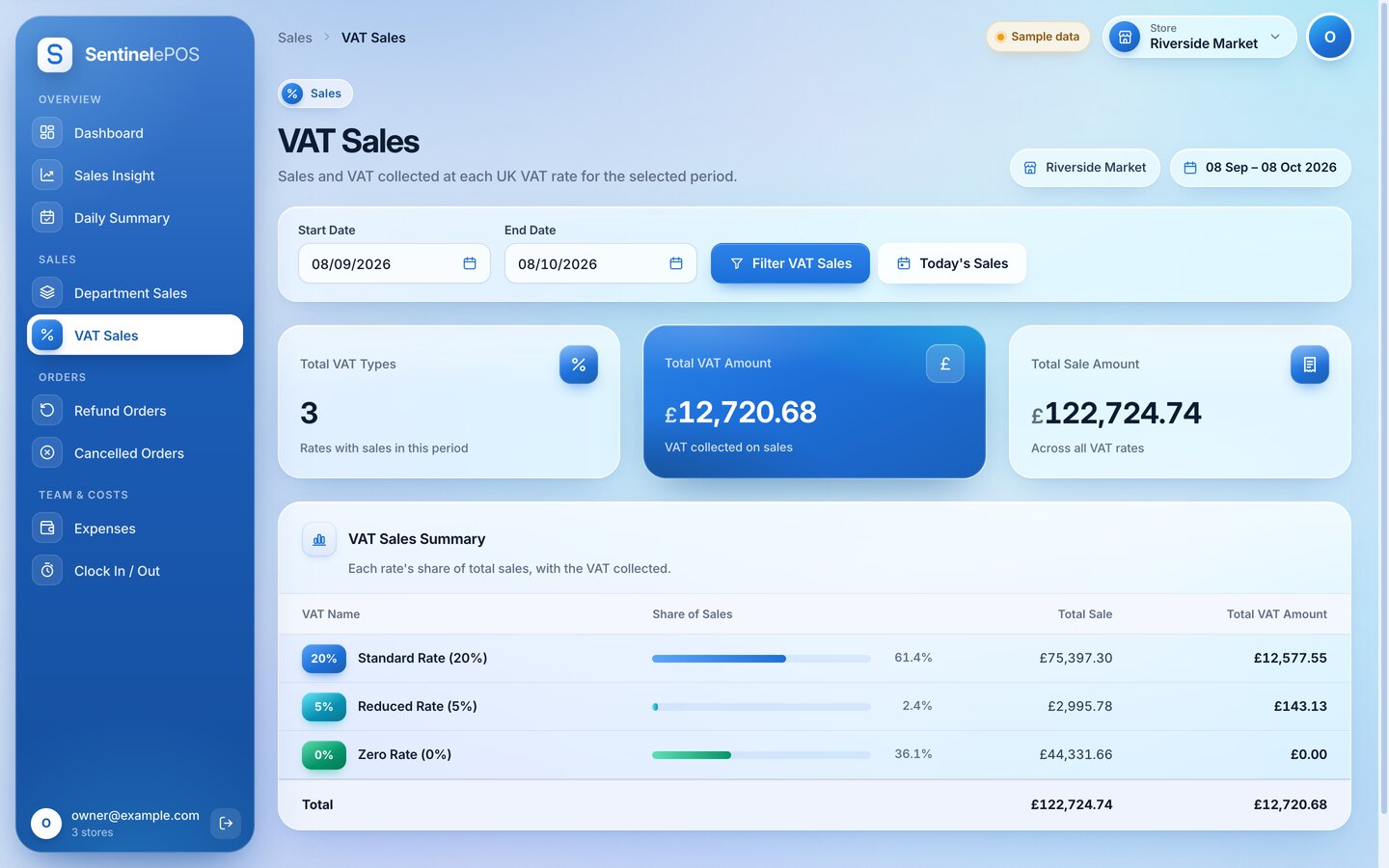
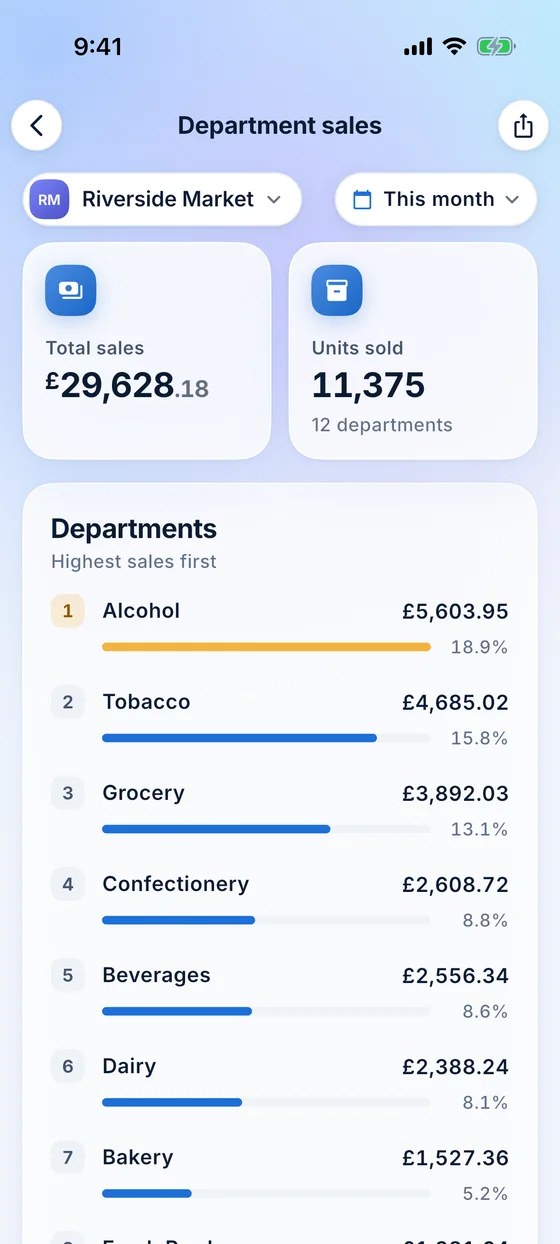
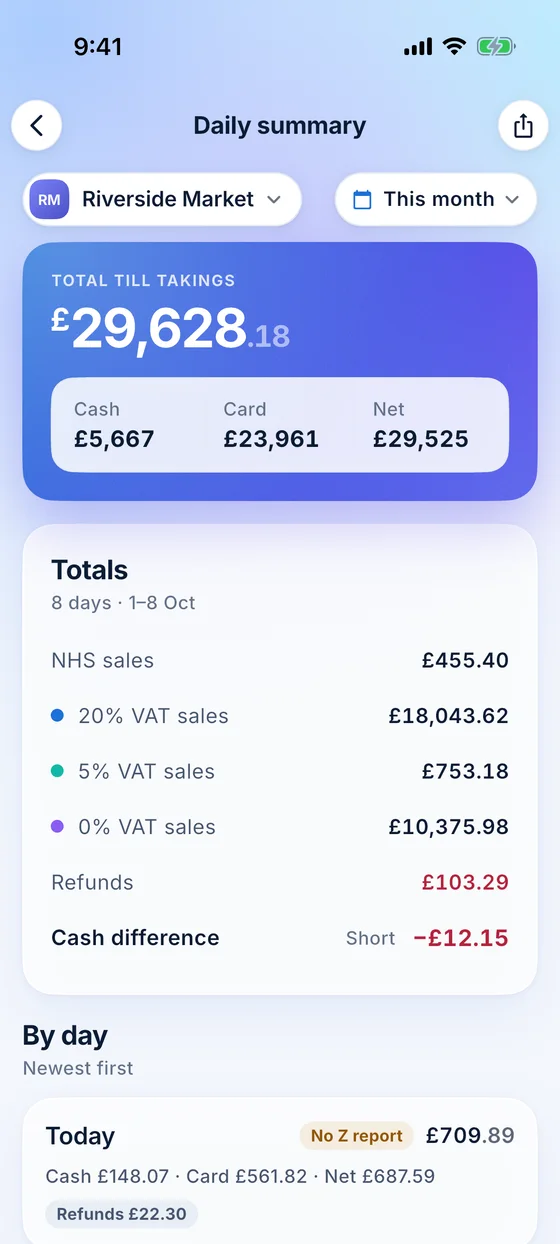
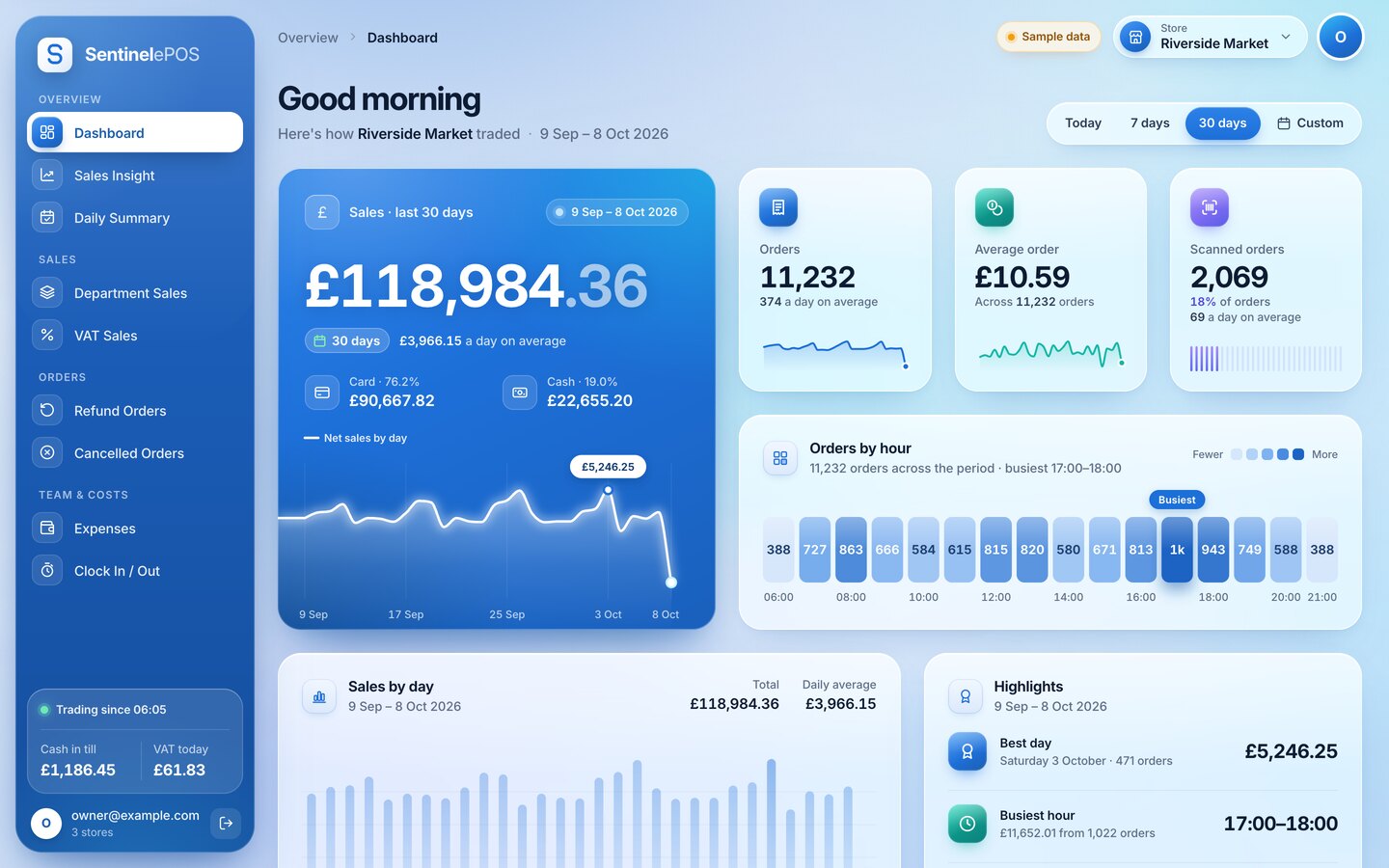
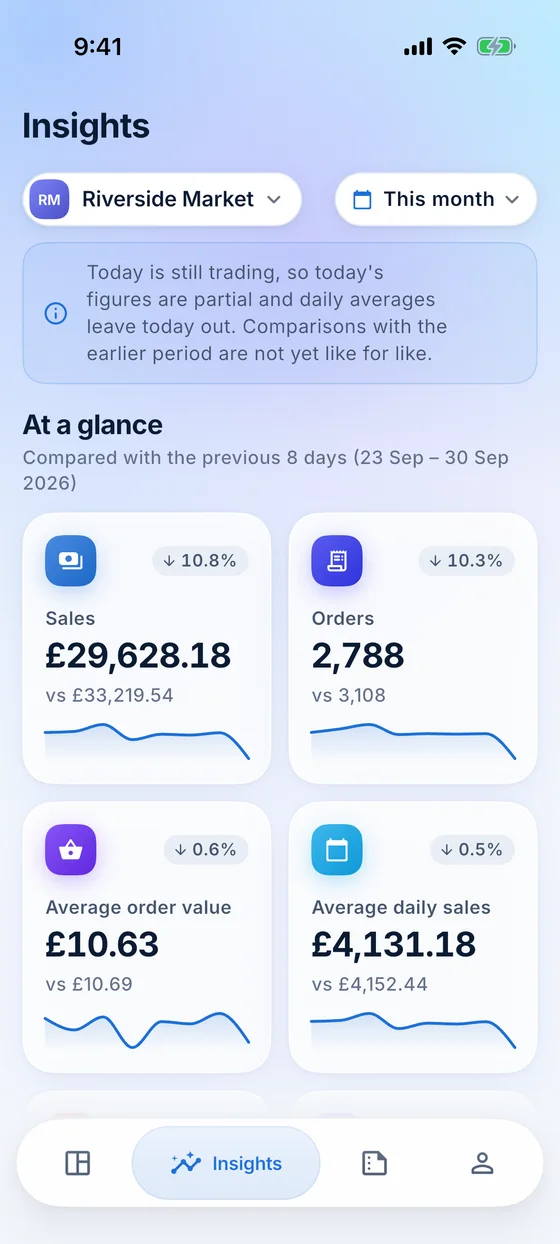
The retail counterpart, for shops rather than restaurants. A web back office with the same owner sign-in, an API built underneath it so a phone app could exist, and the app itself. Daily store summary, VAT by rate, sales by department, refunds, cancellations, staff hours and expenses, each exported as PDF, Excel or CSV from the phone. A dashboard that shows how today compares with a typical day, and a Sales Insight page that writes its own highlights in plain English.
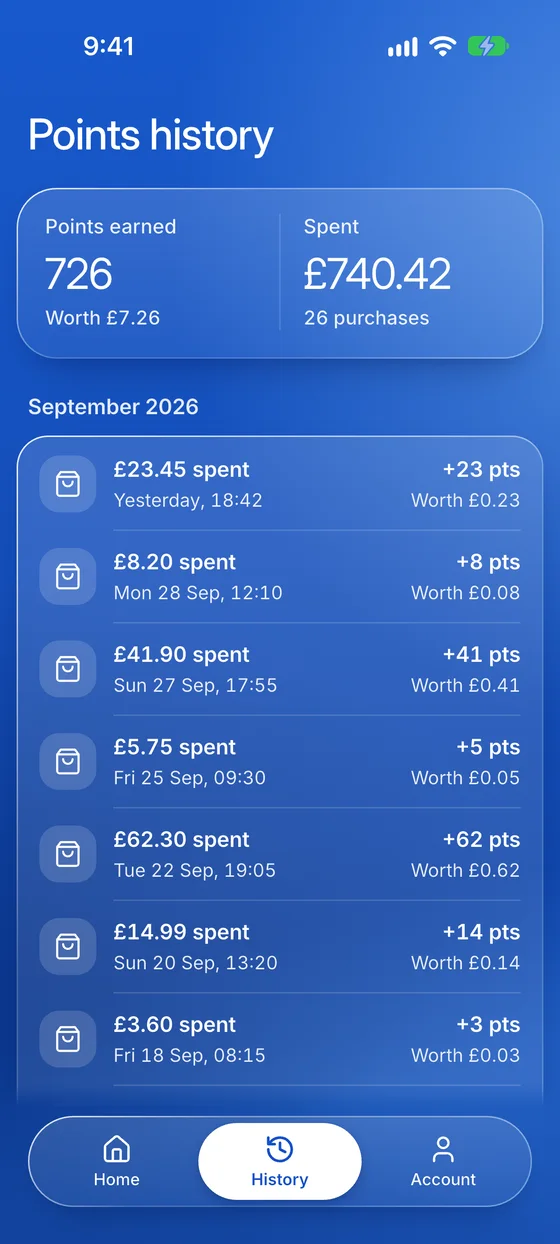
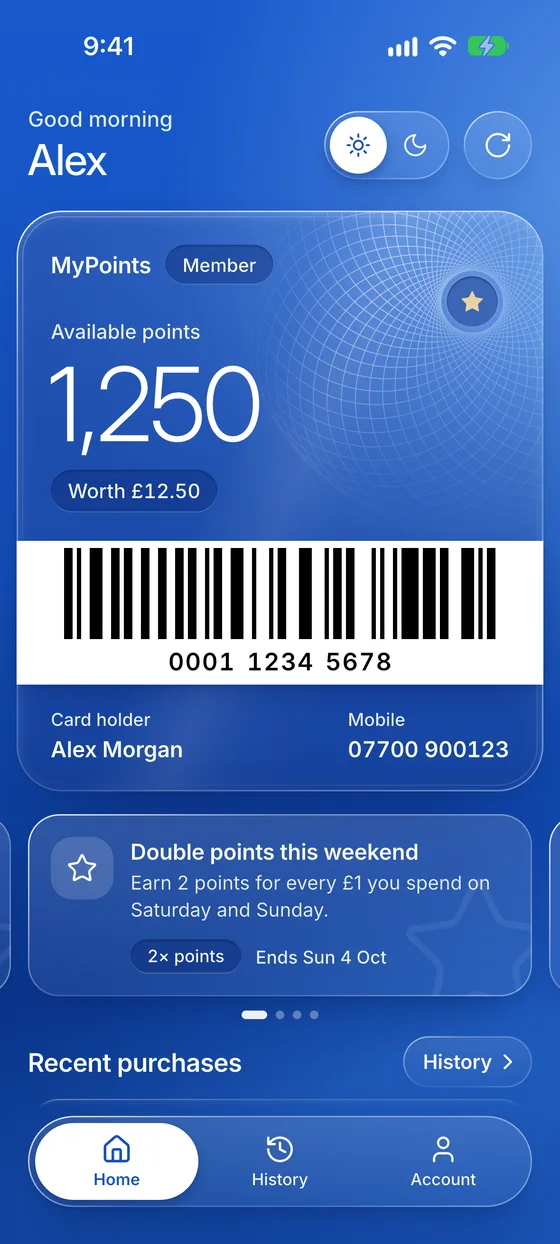
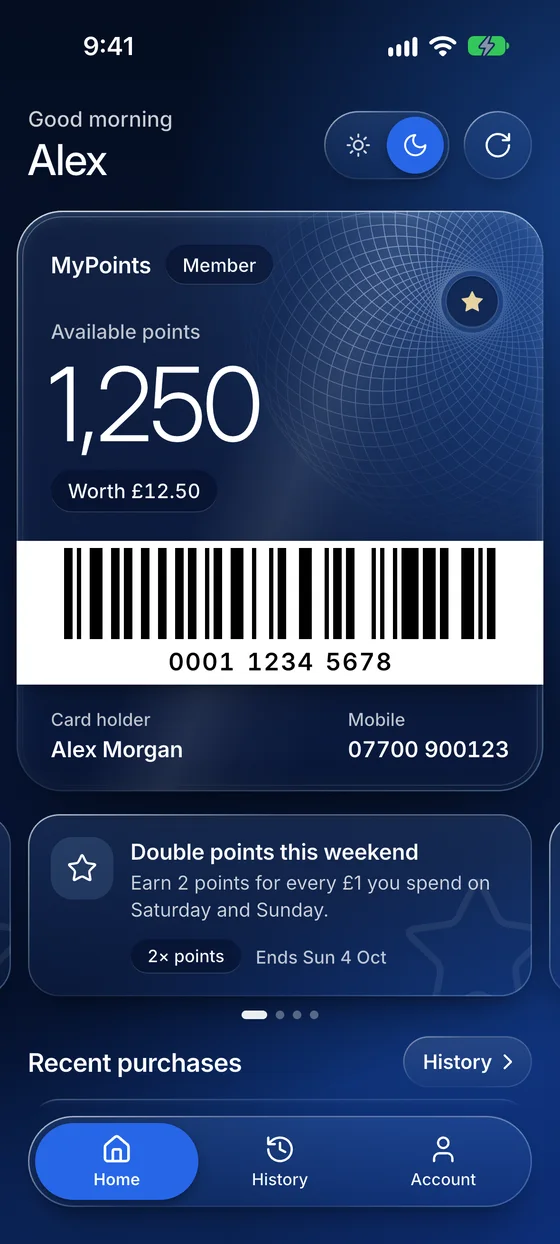
07 Client work · Sentinel EPOS, UK delivered
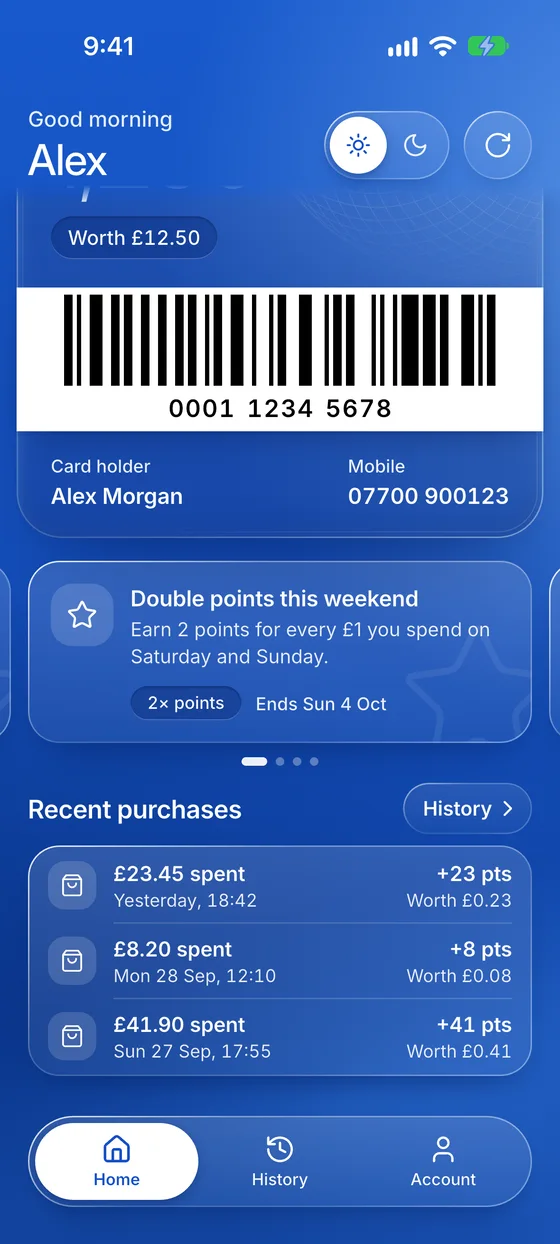
A loyalty card that lives on the phone.
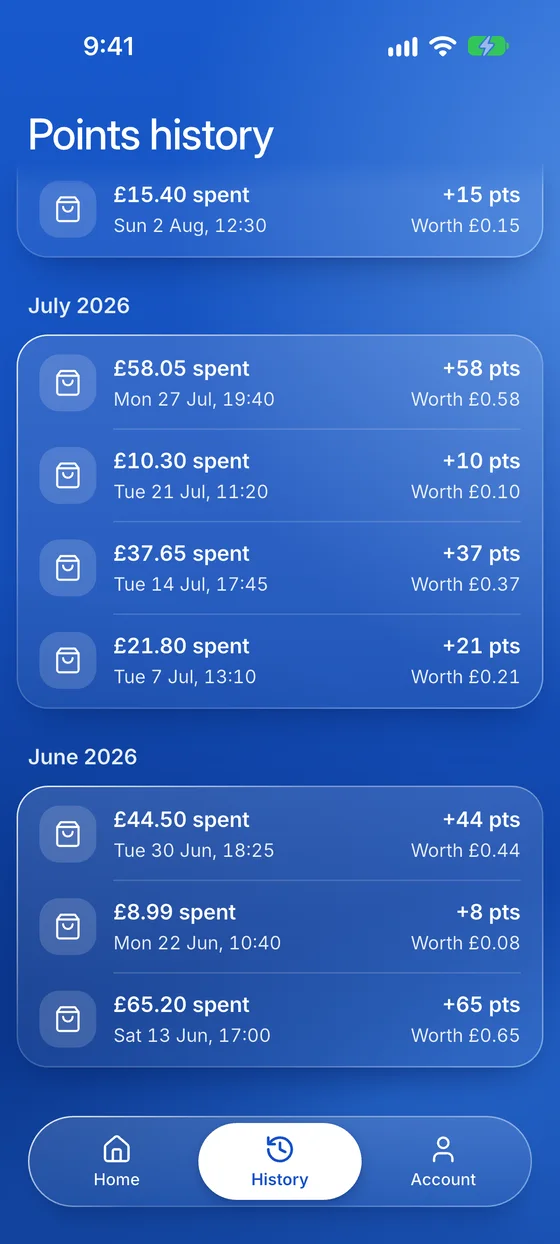
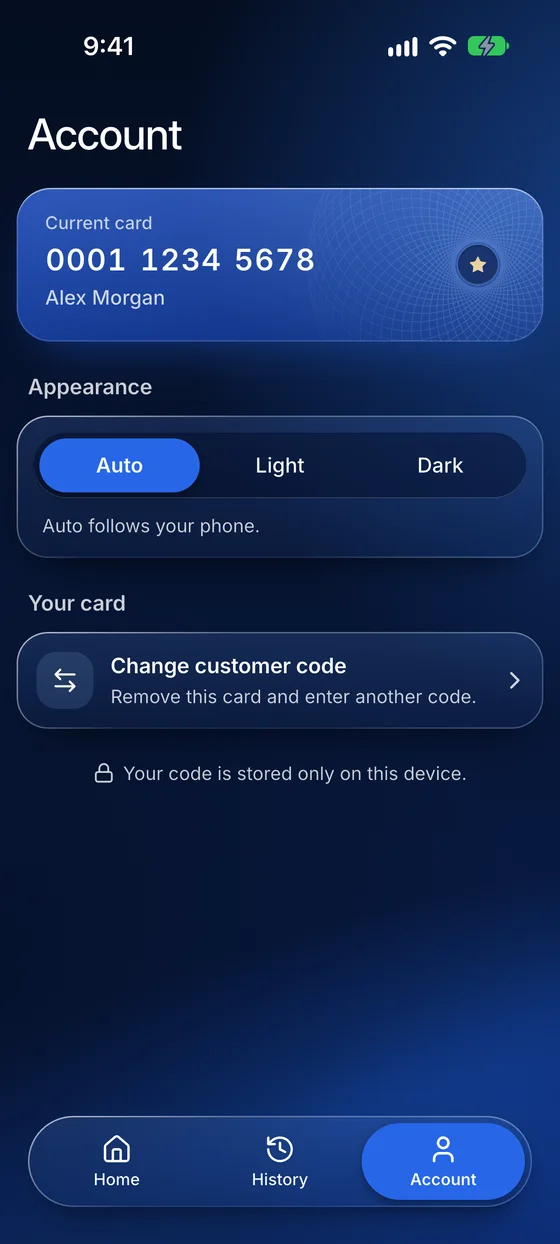
The customer’s side of the same tills. The loyalty card for Sentinel EPOS stores, rebuilt as one Flutter app for iPhone and Android to replace two ageing native apps. A customer types the code their store gave them, once. From then on the app opens on their card: a Code 128 barcode for the till, their points, and what the points are worth, with the store’s offers and the latest movements of their points underneath. It ships as an update to the existing listings, not a new app, so it had to keep the old identity and read the card the native apps had saved.
08 Self-service ordering live
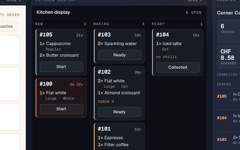
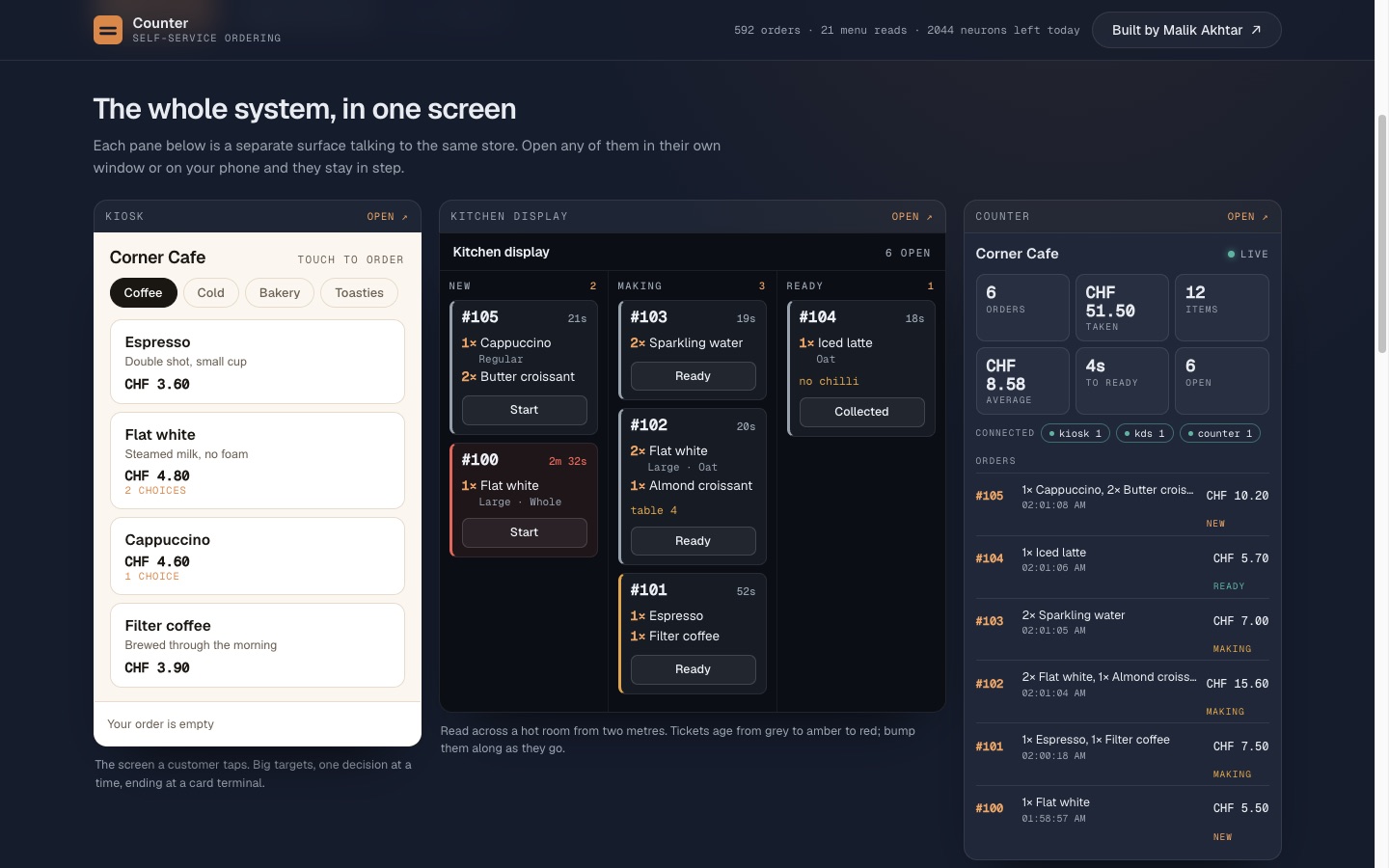
Order on one screen. Watch it land on the others.
A self-service kiosk, a kitchen display and a counter console, all pointed at one store. Tap something on the kiosk and the ticket is on the kitchen display before your finger leaves the glass — on a different device, with no reload. Tickets age from grey to amber to red so a late one is visible across a room, and the console shows the takings, the average time to ready and which surfaces are connected right now.
09 CRM ↔ accounting sync live
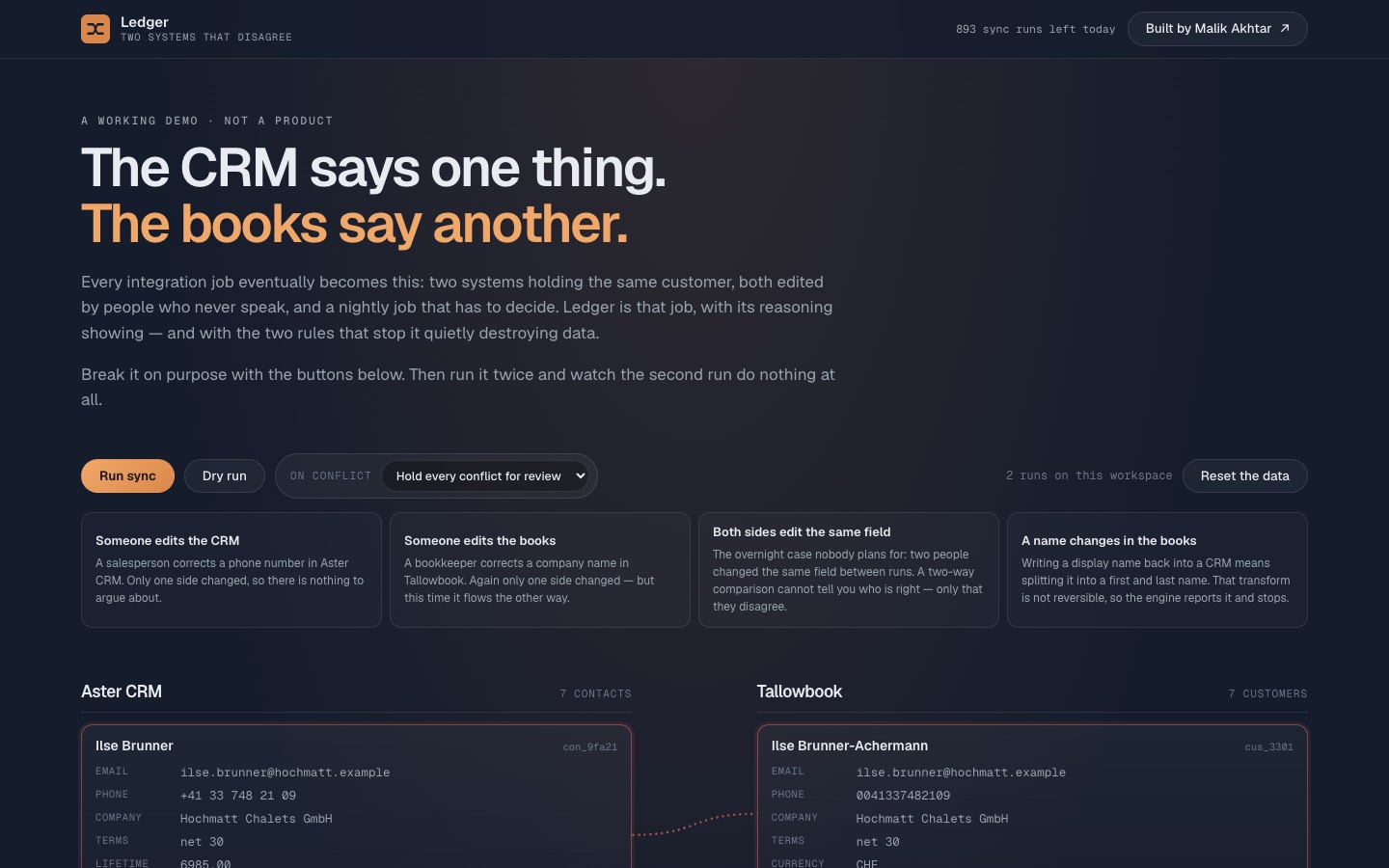
The CRM says one thing. The books say another.
The job I am asked for most often, with its reasoning showing. Two systems hold the same customer, both edited by people who never speak, and something has to decide overnight. Break the data on purpose with the buttons — edit one side, edit both sides, rename somebody in the accounts — then run the sync and read what it decided, record by record. Run it a second time and it writes nothing at all.
10 Assistant on your own data live
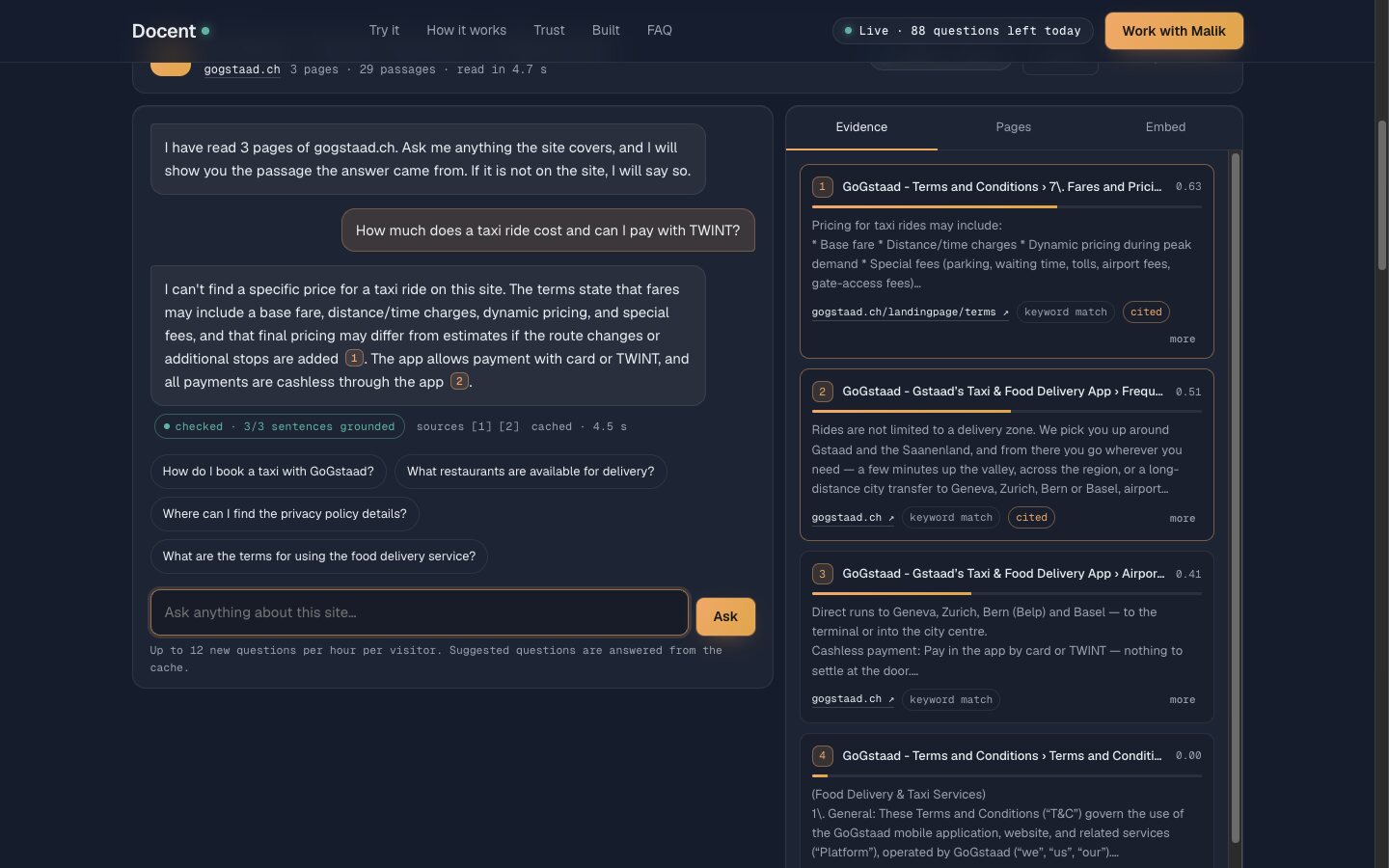
Any website. Answers with receipts.
Paste a website and Docent reads it, indexes it, and becomes its support assistant: every answer cites the exact passage it came from, a second pass checks each sentence against the source, and when the answer isn't on the site it says so. Visitors can try it on their own site and take the embed snippet home.
11 Undocumented APIs live
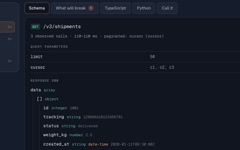
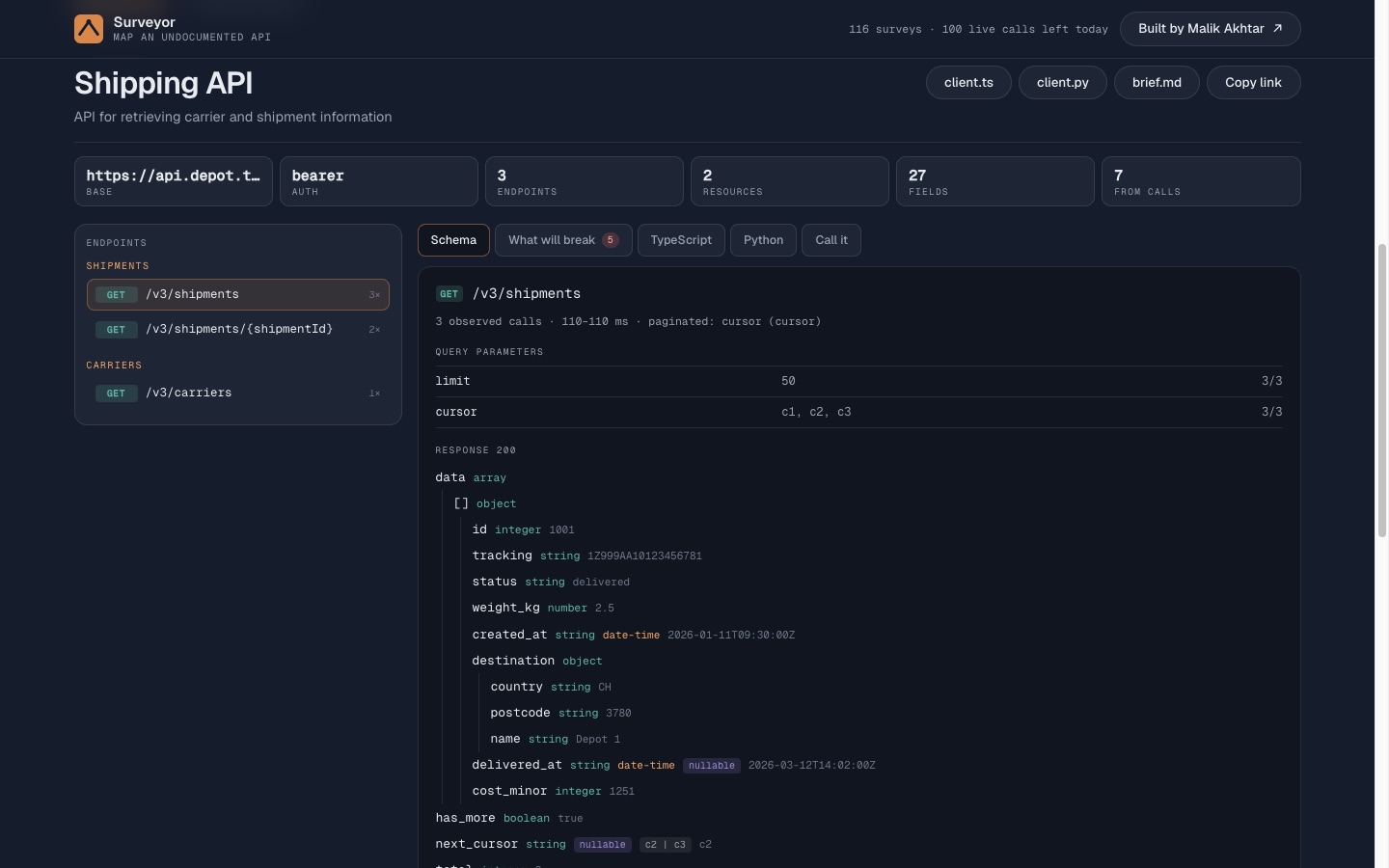
Somebody’s API. No documentation.
Half of integration work is finding out what a system actually does. Drop in a browser network capture, an OpenAPI document, a WSDL or a few curl commands, and Surveyor returns the endpoints, the schemas it really observed, a list of what will break, and a typed client in TypeScript and Python you can download and compile. This is the part of my job I have done most, made into a tool.
12 Payments & subscriptions live
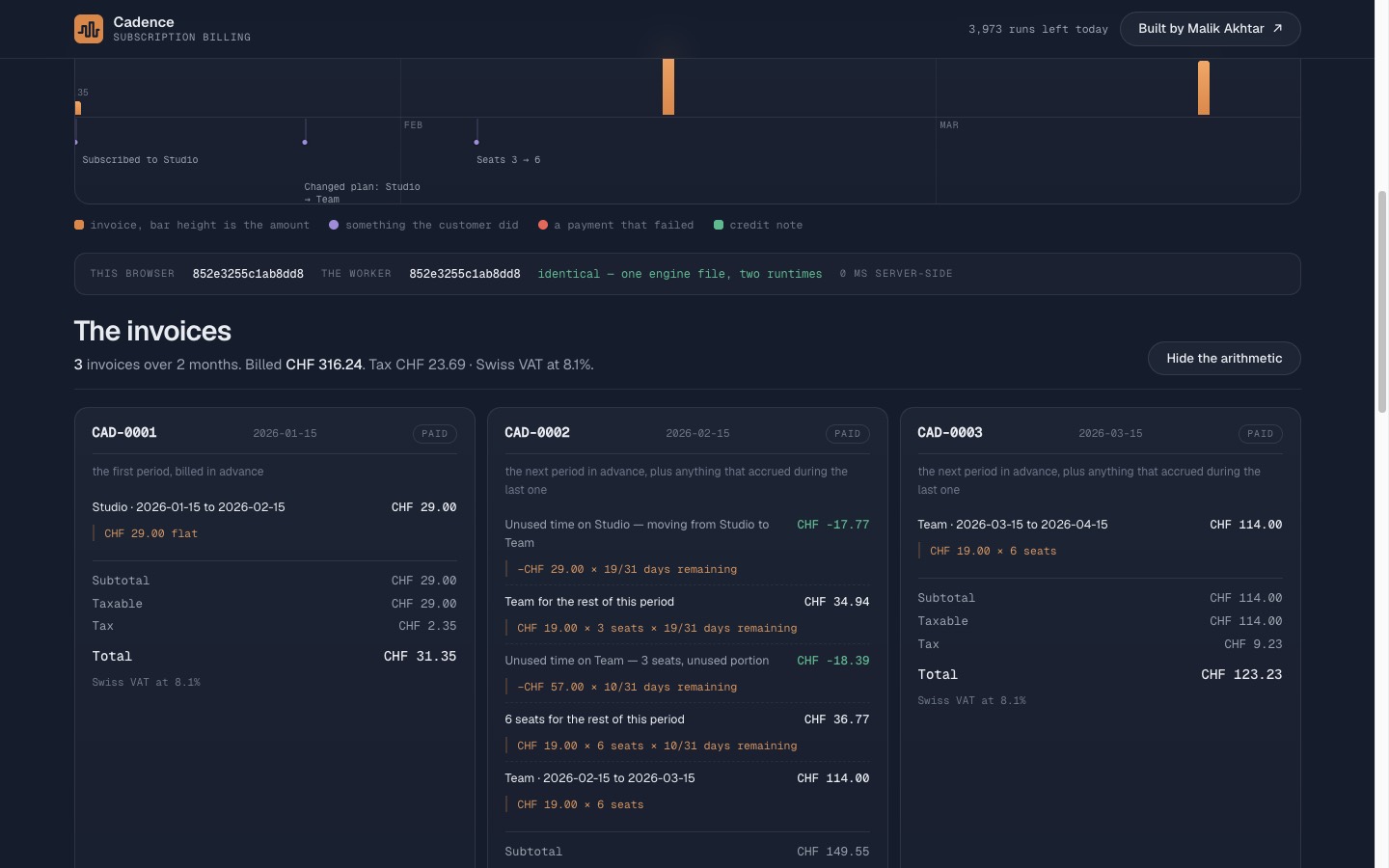
“They upgraded on the 12th. What do they pay?”
Taking the money is the easy half — a payment provider does that, and you should buy it. The hard half is deciding what to charge, and that is the half that gets written badly. Proration in both directions, trials, coupons that expire, graduated tiers, usage billed in arrears against a subscription billed in advance, a card that fails and the ladder that goes back for it, and tax that is sometimes the customer’s problem. Pick a situation and read the arithmetic.
13 AI operations agent live
Paper in. Actions out.
An AI operations agent that reads supplier invoices and customer emails, checks them against the company's own systems, and does the work: bills in QuickBooks, tickets in the helpdesk, a line in Slack.
Four more, all open
Each is a working demo with its own limits, its own budget and its own honest account of what it will not do.
14 Email that lands live
Everyone sends the email. Far fewer check it arrives.
Live DNS for any domain you type, including the check almost nothing runs: SPF is capped at ten DNS lookups, and past the tenth it fails everywhere while still looking perfect. Then the message itself — what breaks in Outlook, what dark mode does to it, what a third of readers see with images off, rendered five ways at once.
Workers · DNS over HTTPS · a DER reader for DKIM key length · a hand-written MIME parser
envelope.malikakhtar.dev15 Offline mobile app live
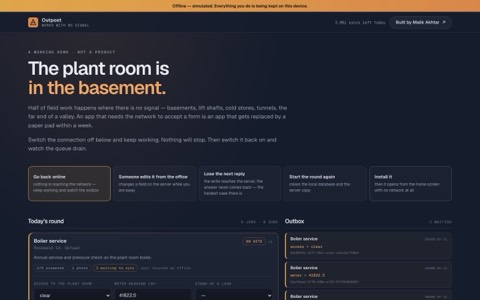
The plant room is in the basement.
An installable field app that does not need a network. Every write lands in IndexedDB and returns immediately; the outbox syncs later, or next week. Install it on your phone, turn on aeroplane mode, open it from the icon and keep working. Then watch the queue drain, with idempotency keys so a lost reply cannot write anything twice.
Service worker · web app manifest · IndexedDB · Workers · D1
outpost.malikakhtar.dev16 Work over a list live
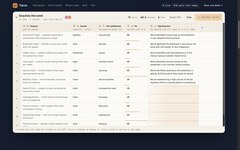
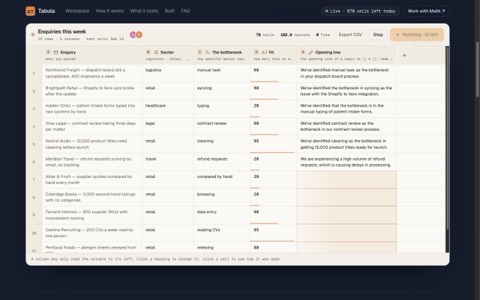
A spreadsheet whose columns do the work.
Give it a list and add a column that fetches, extracts, classifies or scores — then watch the cells fill in live, on every device that has the sheet open. Research and enrichment work that is normally a person and a long afternoon.
Durable Objects · Workers AI · D1 · WebSocket hibernation
tabula.malikakhtar.dev17 Integration plumbing live
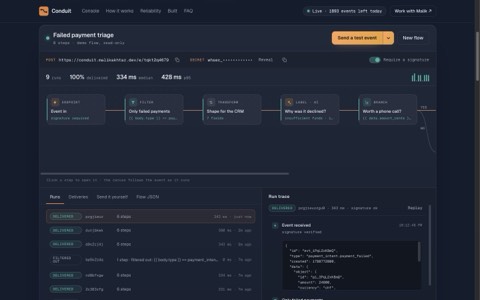
A webhook endpoint that does not lose anything.
Signed webhooks in, a visual pipeline in the middle, retries with backoff, replay of anything that failed, and a cache so the same lookup is not paid for twice. The unglamorous layer that decides whether an integration is reliable or merely working today.
Workers · D1 · two zone routes so the public endpoint sits outside /api
conduit.malikakhtar.dev18 Client work · Logistics company
Refunds, partial payments, and reconciliation handled automatically. Has reconciled cleanly since launch without manual fixes.
No public link — client work
Payments, payouts, terminals, dispatch, maps, messaging, ledgers. Systems I have integrated and shipped — the hard part is never the happy path.
Cards, refunds, partial captures, split payments, payouts. And the webhook that arrives twice, out of order, or six hours late.
Paying with a phone, taking payment on one, and a kiosk that takes it unattended. Device support, certification, and a fallback for every tap that does not read.
Catalogues, orders and stock inside the storefront somebody already runs. Then dispatch, and a map that says where the driver actually is.
The systems of record. The pipeline, the ledger and the stock count, kept in step with each other and with the payments.
Messages that have to arrive, not eventually. Templates, opt-outs, bounces, and deliverability that survives volume.
Where the work actually happens. Read a sheet, drop a file, send it for signature, book the call, post the line that says it is done.
Boards, backlogs, and the base somebody is quietly running their whole business from. Then what the numbers say afterwards.
Tool calling, streaming, structured output that parses every time. Where it runs, what wakes it up, and glue for the parts that do not deserve custom code.
These are the names you will recognise. The rest of the list is longer and duller: SOAP endpoints, OAuth flows, rate-limited REST, and webhooks that have to be idempotent.
Systems that do the work. Not a chatbot that answers and stops. Pick one and the stage draws it.
Systems that do the work: process documents, qualify leads, research, draft, classify, and take real actions inside your tools. Not a chatbot that answers and stops.
LLMs wired into your CRM, database, admin panel, Google Workspace, Slack, Notion, HubSpot, Shopify, or a legacy system nobody wants to touch.
Third-party, undocumented, and legacy SOAP APIs. Webhooks, OAuth flows, rate-limited endpoints, data syncs between systems never designed to talk. Half my career.
Trained on your own data, answering with sources so output is verifiable instead of confidently wrong.
The APIs, queues, schedulers, and pipelines underneath all of the above. Built to survive production, not just a demo.
Multi-domain sending, SPF/DKIM/DMARC, custom tracking domains, warmup, API-level integration.
Full products and internal tools: React and Next.js front ends on Python or Node back ends, admin panels, dashboards, and the APIs underneath. Ten years of shipping software that is documented, structured, and yours.
React Native and Flutter apps that share the API, auth, and data of your web product: iOS and Android from one codebase, with the backend built to match.
Touch-first ordering and checkout that has to run unattended all day: a locked-down Android tablet, an iPad, or a browser in kiosk mode, wired to a card reader and to the systems behind the counter.
I tell you when AI is the wrong tool. Sometimes a 40-line script beats an LLM: cheaper, faster, deterministic. I say so even when the AI version would bill more hours.
01 First reply · within 24 hours
Send me the problem, even roughly. Within 24 hours you get an honest read on approach, timeline, and cost. If I am not the right person for it, I will tell you that too.
02 Scoping call · short, first
A short call before any estimate. I would rather tell you the project is simpler than you thought than take a bloated budget. Sometimes a 40-line script beats an LLM.
03 Scope & milestones · fixed, written
Fixed scope, clear milestones, realistic estimates. I have been wrong enough times to know how long things take, so the plan is one you can hold me to.
04 Build · with written updates
Regular written updates, so you always know the status. Error handling, logging, and monitoring from day one, not after something breaks.
05 Handover & after · support included
Documented, structured, yours: code you can hand to another developer, no lock-in, no black box. Support after delivery. I do not disappear at handover.
Everything orbits the product. Six layers, in the order a request travels through them, and the older ones I still add AI to.
the apps people touch · 5
Products and internal tools: React and Next.js front ends, dashboards and admin panels, and React Native or Flutter apps that share the same API and data.
the APIs and the logic · 6
FastAPI and Django in Python, Express and NestJS in Node: the APIs, queues, schedulers and pipelines underneath everything, built to survive production.
the reasoning, kept on a leash · 9
Agents with strict tool schemas and approval thresholds, RAG assistants that answer with sources, evals so the output is verifiable instead of confidently wrong.
where it lives and runs · 10
PostgreSQL first. Redis for queues and caching, vector stores for retrieval, Docker and AWS with CI/CD so deploys are boring and repeatable.
the systems it has to talk to · 12
Half my career: third-party, undocumented and legacy APIs, webhooks, OAuth flows, rate limits, and syncs between systems that were never designed to talk.
systems that already exist · 4
For adding AI and modern integrations to PHP/Laravel and .NET/C# systems that already exist and that nobody wants to rewrite.
210+projects delivered with a 5.0 average rating on Fiverr , over ten years, on this stack. Eighteen of them are described in Work; these are the kinds of problems behind the rest.
“Read our documents and do the work in our tools.”
AI / LLMBackendData & infra
“Answer questions from our docs, with sources.”
AI / LLMData & infra
“A product, an admin panel, a dashboard.”
Web & mobileBackendData & infra
“iOS and Android, one codebase, same backend.”
Web & mobileBackend
“Make Stripe, HubSpot and QuickBooks agree.”
IntegrationBackendData & infra
“Talk to a system nobody wants to touch.”
IntegrationLegacy
“The queue, the scheduler, the API underneath.”
BackendData & infra
“Our mail lands in spam.”
BackendIntegration
“Add AI to the PHP or .NET system we already run.”
LegacyAI / LLM
PostgreSQL before a new database, a queue before a framework, a 40-line script before an LLM. Deterministic wins when it can.
I tell you when AI is the wrong tool, even when the AI version would bill more hours. The stack serves the problem, not the other way round.
Documented, structured, standard tools another developer can pick up. No lock-in, no black box, no framework only I understand.
Send me the problem. Short scoping call first — I would rather tell you the project is simpler than you thought than take a bloated budget.